


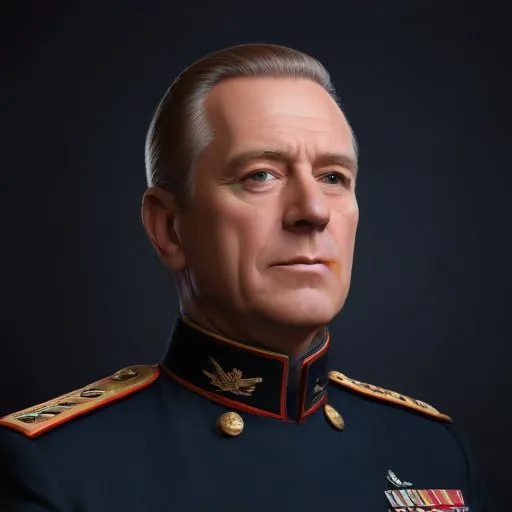
Led a Continental Army regiment during the American Revolutionary War, earning recognition for his bravery and tactical skills at the Battle of Bennington. He's often referred to as the "Hero of Bennington".
John Stark, a renowned American military officer, earned his place in history as the Hero of Bennington for his exceptional bravery during the Battle of Bennington in 1777. This pivotal battle was a decisive victory for the Continental Army during the Revolutionary War, and Stark's leadership played a crucial role in securing this triumph.
Born on August 28, 1728, in Londonderry, New Hampshire (now Derry), John Stark grew up in a family of Scottish and English descent. His father, Archibald Stark, emigrated from Glasgow, Scotland, to Ireland, where he met his future wife. In 1736, the Stark family relocated to Derryfield (present-day Manchester, New Hampshire), where John would spend the rest of his life.
In 1752, while on a hunting trip, Stark was captured by Abenaki warriors and taken to Canada. During his captivity, he demonstrated remarkable courage, grabbing a stick from a warrior's hand and attacking him, surprising the other warriors. This bold act impressed the chief, leading to Stark's adoption into the tribe. After spending the winter with the Abenaki, Stark was ransomed and returned to New Hampshire, bringing with him invaluable experience and a deeper understanding of Native American customs.
Stark's military career began during the French and Indian War, where he served as a second lieutenant under Major Robert Rogers. Alongside his brother William, Stark fought in several battles, including the Battle of Fort Duquesne. As a member of the elite Rogers Rangers, Stark gained valuable combat experience, skills that would serve him well in future battles.
During the American Revolutionary War, Stark played a crucial role in the Continental Army, leading troops to victory in several battles. His most notable achievement came at the Battle of Bennington, where his tactical prowess and bravery secured a decisive win for the Continental Army. This triumph earned him the esteemed title "Hero of Bennington."
In 1753, Stark married Elizabeth "Molly" Page, with whom he had 11 children. His eldest son, Caleb, would go on to become a prominent figure in New Hampshire politics. Throughout his life, Stark remained committed to public service, serving as a judge and a member of the New Hampshire state legislature.
John Stark's legacy extends beyond his military achievements. He embodied the values of courage, resilience, and duty, inspiring generations to come. His bravery at the Battle of Bennington has become an iconic symbol of American patriotism, and his adopted state of New Hampshire honors him with a statue in the National Statuary Hall.
Live free or die; death is not the worst of evils.
John Stark's heroism and selflessness have left a lasting impact on American society. His courage in the face of adversity continues to inspire individuals to stand up for their beliefs and fight for what they believe in. As a symbol of patriotism and duty, Stark's legacy serves as a reminder of the importance of public service and the value of sacrifice.
Born in 1732
The first President of the United States, a military hero who led the country to independence, and set the standard for the office of the presidency. He's known for his honesty, integrity, and leadership skills.
Born in 1741
A traitorous American general who defected to the British Army during the American Revolutionary War, leading to a pivotal moment in American history.
Born in 1737
First Governor of Massachusetts, instrumental in American independence and famously signed the Declaration of Independence with a large, bold signature .
Born in 1735
This American patriot and artisan is famous for his midnight ride during the American Revolution, warning colonists that the British were coming, and for his iconic engravings, including the Boston Massacre depiction.
Born in 1722
A leading figure in the American Revolution, he played a key role in shaping the country's independence and democracy. He's also famous for his Boston Beer Company, which still brews his namesake beer today.
79 Years Old
A Pulitzer Prize-winning composer, known for blending minimalism with complex rhythms, creating a unique sound that resonates with audiences worldwide.
Born in 1743
The principal author of the Declaration of Independence and a strong advocate for individual liberties and limited government, shaping America's foundational principles. He oversaw the Louisiana Purchase, doubling the country's territory.
Born in 1706
A founding father of the United States, he was a leading figure in the Enlightenment, known for his groundbreaking inventions, scientific discoveries, and influential writings. He played a key role in shaping American history and politics.
