


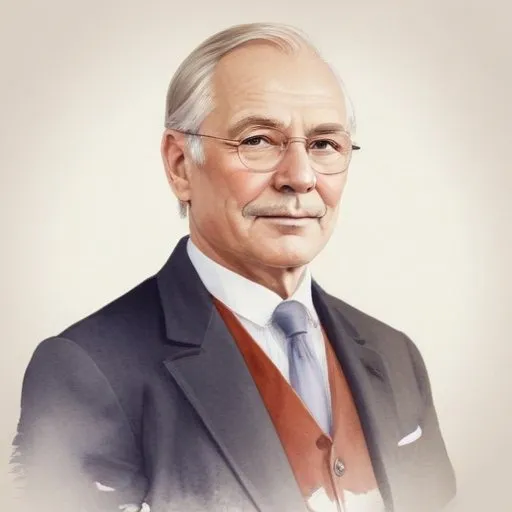
Developed innovative methods for producing uniform polymer beads, revolutionizing industries such as biomedicine and chromatography. His work enabled the creation of tiny, identical particles with precise properties.
John Ugelstad, a Norwegian chemical engineer and inventor, revolutionized the field of polymer chemistry with his groundbreaking discovery of a process to manufacture monodisperse micropellets, also known as microbeads and dynabeads. This innovation has had a profound impact on various industries, from biotechnology to cosmetics, and has cemented Ugelstad's place as a pioneer in his field.
Born on March 31, 1921, in Trondheim, Norway, Ugelstad grew up in a family of entrepreneurs. His father, Petter Endresen Ugelstad, was a factory owner, and his mother, Karen Stene, was a homemaker. Ugelstad's curiosity and passion for science led him to pursue a degree in chemistry at the Norwegian Institute of Technology (NTH), where he graduated in 1941.
After completing his studies, Ugelstad worked in industry for a few years before joining Philips Group's research department in Eindhoven, the Netherlands. It was during this time that he earned his PhD from the University of Leiden in 1955. His research focus shifted to polymer chemistry, and he became employed by the Norwegian research institute SINTEF and later by the Institute of Industrial Chemistry at NTH.
Ugelstad's sabbatical at the Norwegians research department from 1964 to 1965 proved to be a turning point in his career. He developed a new and epochal theory of emulsion polymerization, which replaced the existing theories and dominated the field. This work, along with his later discovery of monodisperse spheres, solidified his position as a leading expert in polymer chemistry.
In 1966, Ugelstad became a professor at NTH, a position he held until 1991. Alongside his teaching and research, he consulted for industry giants like DuPont, providing expertise in theoretical polymer chemistry.
In 1977, Ugelstad's innovative spirit struck again. During a conference in the United States, he was introduced to the challenge of preparing monodisperse spheres. He returned to Trondheim determined to find a solution. One fateful night, the answer came to him, and he realized that manufacturing these tiny particles was possible in a regular laboratory.
Ugelstad's discovery of monodisperse micropellets has had far-reaching implications for various fields, including biotechnology, cosmetics, and pharmaceuticals. His work has enabled the creation of uniform particles with precise properties, leading to advancements in drug delivery, gene therapy, and skincare products.
John Ugelstad's contributions to polymer chemistry have been immense, and his discovery of monodisperse micropellets has opened doors to new possibilities in various industries. His legacy extends beyond his scientific achievements, as he has inspired generations of researchers and innovators.
Through his work, Ugelstad has demonstrated the power of human ingenuity and creativity. His life serves as a testament to the importance of perseverance, curiosity, and innovation, leaving behind a lasting impact on the world of science and beyond.
John Ugelstad's remarkable journey serves as a reminder of the power of human innovation and the importance of perseverance in the pursuit of knowledge.
97 Years Old
German football legend and 1954 World Cup winner, scoring the winning goal in the final against Hungary, cementing his place in football history.
