


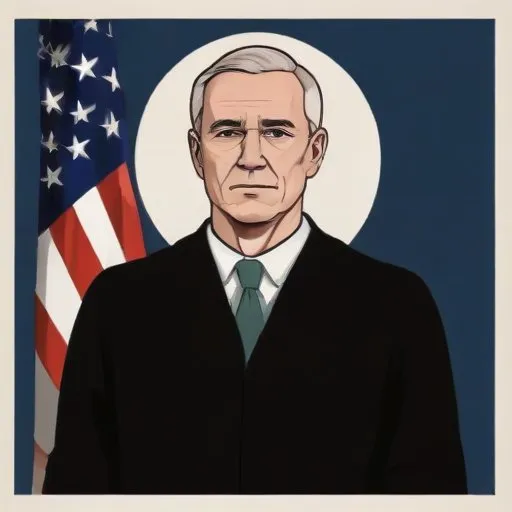
First Governor of Oregon, instrumental in shaping the state's early development and laws. Known for his role in Oregon's transition from a territory to a state.
John Whiteaker, born on May 4, 1820, etched his name in the annals of American history as the first state Governor of Oregon, serving from 1859 to 1862. This trailblazing politician, soldier, and judge played a pivotal role in shaping the state's early development, leaving an enduring legacy in the Pacific Northwest.
Whiteaker's humble beginnings in Dearborn County, Indiana, saw him born to farming parents John and Nancy (née Smales). Despite receiving only six months of formal education, Whiteaker's self-taught nature and perseverance helped him overcome early obstacles. He worked odd jobs, honed his carpentry skills, and even volunteered for military service during the Mexican-American War, although his unit was never deployed.
In 1849, Whiteaker joined the throngs of prospectors flocking to California in search of gold. His success in the Golden State enabled him to relocate his family to Oregon in 1852, where he settled in the Willamette Valley's southern region in Lane County. It was here that he began his foray into politics, becoming an active member of the Democratic Party.
Whiteaker's political ascendance began with his election as judge of the Probate Court for Lane County in 1856. The following year, he was elected to the Territorial Legislature, representing Lane County in the House of Representatives. As Oregon prepared for statehood in 1857, Whiteaker's star continued to rise, with his selection as the Democratic faction's nominee in the first state gubernatorial election in 1858.
Whiteaker's victory in the election, with a margin of 1,138 votes, marked a significant milestone in Oregon's history. He was inaugurated on July 8, 1858, but did not assume office until Congress passed Oregon's statehood bill on February 14, 1859. During his tenure as governor, Whiteaker worked tirelessly to establish the state's infrastructure, promoting education, transportation, and economic development.
After completing his term as governor, Whiteaker continued to serve Oregon in various capacities. He was elected president of the Oregon State Senate and later became Speaker of the Oregon House of Representatives. In 1879, he was elected as Oregon's Congressman, serving until 1881. Whiteaker's dedication to public service and his pioneering spirit have cemented his place as one of Oregon's most revered figures.
Whiteaker's political ideology was rooted in Democratic principles, and he was a strong advocate for states' rights and limited federal intervention. Throughout his career, he demonstrated a deep commitment to education, infrastructure development, and economic growth, shaping Oregon's early development and laying the groundwork for future generations.
John Whiteaker's remarkable life and achievements are a testament to the pioneering spirit that defined Oregon's early years. As the state's first governor, he navigated the complexities of statehood, establishing a foundation for Oregon's growth and development. Today, Whiteaker's legacy continues to inspire Oregonians, serving as a reminder of the importance of visionary leadership and dedication to public service.
Born in 1763
A German-American mogul who built a fur trading empire and invested in real estate, amassing a vast fortune, which he later used to support the arts and education.
Born in 1824
A 19th-century adventurer who led multiple private military expeditions in Central America, attempting to conquer and establish his own governments. He's infamous for his filibustering exploits.
