


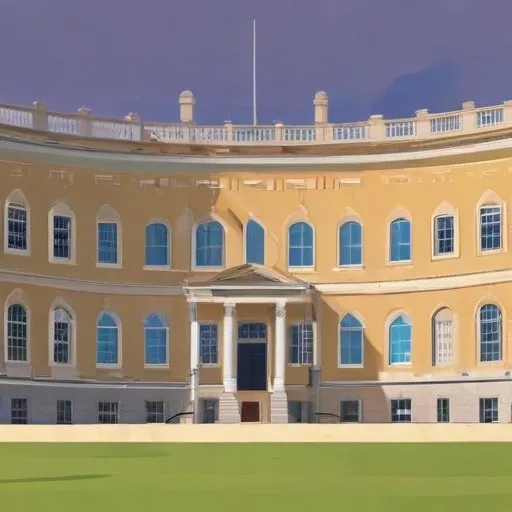
Designed iconic Georgian architecture, including the Royal Crescent, a sweeping arc of elegant townhouses in Bath, England. This masterpiece of urban planning and design has stood the test of time.
John Wood, the Younger, is renowned for his exquisite architectural designs that revolutionized the city of Bath, Somerset, in the 18th century. His iconic creations, such as the Royal Crescent, have cemented his reputation as one of the greatest architects of the Georgian era.
Born on February 25, 1728, in Bath, Wood was destined to follow in his father's footsteps. His father, John Wood, the Elder, was a prominent architect, and the younger Wood received his training under his watchful eye.
As a young man, Wood worked on several projects with his father, including the prestigious Liverpool Town Hall. This early exposure not only honed his skills but also instilled in him a deep understanding of his father's vision for Bath.
In 1752 or early 1753, Wood married Elizabeth Brock, with whom he had two sons and at least eight daughters. Shortly after, he embarked on his independent career, building upon his father's legacy in Bath.
Wood's first major project was completing the Circus, a sweeping circular development that his father had begun. He then designed and built Gay Street, connecting Queen Square and the Circus, further solidifying his father's greatest triumphs.
Throughout his career, Wood created numerous iconic buildings, terraces, and set pieces for Bath, showcasing his mastery of the Georgian style. Notable examples include the Hot Bath, Royal Crescent, and the Bath Assembly Rooms, which epitomize the 18th-century fashion for Neoclassicism.
Unlike his father, Wood did not share a passion for druidism and freemasonry. However, his designs reflect the prevailing philosophical and cultural trends of the 18th century, incorporating subtle themes and inspirations from the era.
During the 1770s, Wood pioneered a new, more severe Neoclassical style in Bath, which contrasted with his father's more ornate and embellished approach. This innovative style, characterized by its use of the Doric order, is evident in his later works.
John Wood, the Younger, passed away on June 16, 1781, leaving behind a rich architectural heritage that continues to inspire and delight to this day. His contributions to Bath's urban landscape have earned him a place among the most celebrated architects of his time.
The Royal Crescent, in particular, stands as a testament to Wood's genius, with its majestic sweep of Georgian townhouses that create a breathtaking visual harmony.
Through his exceptional creations, Wood has left an indelible mark on Bath's cultural and architectural identity, ensuring his legacy as one of the greatest architects of the Georgian era.
Born in 1728
A renowned architect who transformed 18th-century British architecture with his neoclassical style, designing iconic buildings like Culzean Castle. His work continues to inspire architects and designers today.
Born in 1753
Designed iconic buildings that blended neoclassicism with innovative flair, leaving an indelible mark on London's architectural landscape.
Born in 1736
Improved steam engine efficiency, revolutionizing industry and transportation. Known for his innovative designs and patents that transformed the Industrial Revolution.
