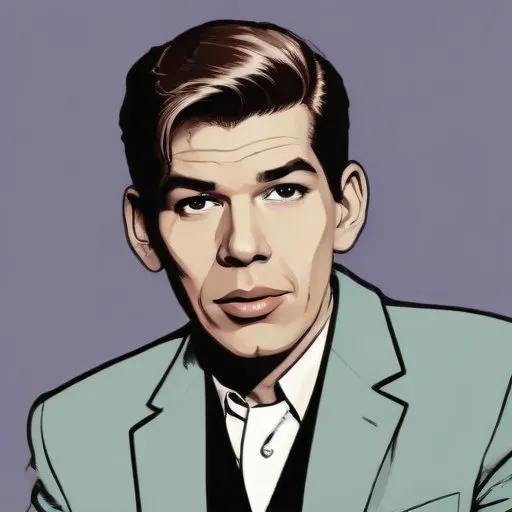
The Pioneering Crooner: Johnnie Ray, the Father of Rock and Roll
A Revolutionary Voice in Music
Johnnie Ray, the American singer, songwriter, and pianist, is widely regarded as a precursor to rock and roll, and his influence on the genre is still felt today. With his distinctive, emotive voice and dynamic stage presence, Ray captivated audiences in the 1950s, earning himself a place in music history.
Early Beginnings
Born on January 10, 1927, in Dallas, Oregon, Ray grew up in a musical family and began singing professionally at the tender age of 15 on Portland radio stations. Despite being partially deaf, Ray's passion for music drove him to overcome his disability and pursue a career in the industry.
Rise to Fame
Ray's big break came in 1949 when he was discovered performing at a small nightclub in Detroit. Signed to Okeh Records, a subsidiary of Columbia Records, Ray released his debut album,
Johnnie Ray, in 1952, which propelled him to stardom. The album's 78 rpm single, featuring "Cry" and "The Little White Cloud That Cried," both reached the top of the
Billboard Hot 100 chart.
A Pioneer in Rock and Roll
Ray's unique blend of jazz, blues, and rhythm and blues influenced a generation of musicians, including
Elvis Presley, who often cited Ray as a major inspiration. Music historians have credited Ray's emotive, heart-wrenching vocals and dynamic stage performances as precursory to later performers like
Leonard Cohen and Morrissey.
Screen Debut and International Success
In 1954, Ray made his film debut in the musical
There's No Business Like Show Business, alongside an all-star cast, including
Ethel Merman and
Marilyn Monroe. Although his American career began to wane in the late 1950s, Ray maintained a strong following in the United Kingdom and Australia, where he continued to tour and record until his death in 1990.
Legacy and Impact
Ray's legacy extends far beyond his impressive chart success and film appearances. He has been hailed as a pioneering figure in the development of rock and roll, and his influence can still be heard in contemporary music.
Tony Bennett, a longtime admirer, has dubbed Ray the "father of rock and roll," and his music continues to inspire new generations of musicians and fans.
Personal Life and Trivia
- Ray was known for his powerful, emotional performances, which often left him exhausted and drained.
- He was a prolific songwriter and recorded over 200 songs during his career.
- Ray was openly gay, which was a rare and courageous stance for a public figure in the 1950s.
Remembering Johnnie Ray
Johnnie Ray's remarkable career and lasting impact on music make him an unforgettable figure in the history of rock and roll. His trailblazing spirit, emotional vocals, and unforgettable stage presence have ensured his place as a true pioneer in the genre.
FAQ
What was Johnnie Rays role in the development of rock and roll?
Johnnie Ray was one of the earliest stars of rock and roll, known for his energetic stage presence and emotive vocals. He was a key figure in the development of the genre, influencing later musicians such as Elvis Presley and Buddy Holly.
What were Johnnie Rays most popular songs?
Johnnie Rays most popular songs include Cry, The Little White Cloud That Cried, and Walkin My Baby Back Home. He was known for his powerful vocals and ability to interpret a wide range of musical genres.
What was Johnnie Rays relationship like with Liberace?
Johnnie Ray and Liberace were close friends and confidants, and were known for their flamboyant stage personas. They often performed together and were rumored to have had a romantic relationship.
How did Johnnie Rays music influence later generations?
Johnnie Rays music and style influenced a generation of musicians, including Elvis Presley, Buddy Holly, and Jerry Lee Lewis. His emotive vocals and energetic stage presence helped to shape the sound of early rock and roll.
What is Johnnie Rays legacy in rock and roll history?
Johnnie Rays legacy in rock and roll history is one of innovation and creativity. He remains a beloved figure in American music, and his music continues to be celebrated and enjoyed today.