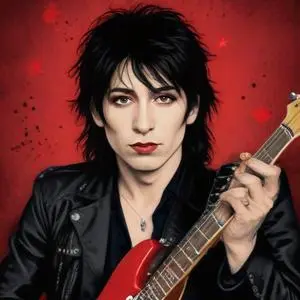
Johnny Thunders: The Iconic Guitarist and Singer of the New York Dolls
The Early Years and Rise to Fame
Johnny Thunders, born John Anthony Genzale on July 15, 1952, was an American guitarist, singer, and songwriter who rose to prominence in the early 1970s as a member of the influential rock band New York Dolls. Known for his raw, untamed guitar riffs and distinctive vocal style, Thunders was a key figure in the development of punk rock and glam rock.
The New York Dolls
Thunders' early life was marked by a passion for music, with his first musical performance in 1967 with The Reign. He later played with Johnny and the Jaywalkers before forming the New York Dolls in 1969. The band's music was a fusion of garage rock, glam rock, and proto-punk, characterized by Thunders' raunchy guitar sound and the band's androgynous, flamboyant style.
The New York Dolls were signed to Mercury Records and released two albums, New York Dolls (1973) and Too Much Too Soon (1974), both produced by Todd Rundgren and Shadow Morton. The band's music was influential, but their popularity was short-lived, and they disbanded in 1975.
The Heartbreakers and Solo Career
After the New York Dolls, Thunders formed The Heartbreakers with Jerry Nolan, a fellow Dolls alum. The band released one album,
L.A.M.F. (1977), which was marked by poor production quality but has since become a cult classic. Thunders went on to pursue a solo career, releasing several albums, including
So Alone (1978) and
Hurt Me (1983).
Thunders' guitar sound was characteristic of his raw, unbridled style. He was known for his use of distortion, reverb, and feedback, creating a unique, untamed sound that influenced countless punk and rock bands. His style was also marked by his androgynous fashion sense, which challenged traditional gender norms.
Thunders' influence can be seen in bands such as The Sex Pistols, The Clash, and The Ramones, who were all influenced by his music and style. His legacy continues to be felt in punk and rock music today.
Personal Life and Legacy
Thunders' personal life was marked by struggles with addiction and health problems. He died on April 23, 1991, at the age of 38, in New Orleans, Louisiana.
Despite his short life, Thunders left an indelible mark on the music world. His music and style continue to inspire new generations of musicians and fans, and his legacy as a punk rock pioneer remains unchallenged.
Discography
- New York Dolls (1973) - with the New York Dolls
- Too Much Too Soon (1974) - with the New York Dolls
- L.A.M.F. (1977) - with The Heartbreakers
- So Alone (1978) - solo album
- Hurt Me (1983) - solo album
Quotes and Memorable Sayings
"I'd rather be a failure doing what I want than a success doing what I don't want."
"Rock 'n' roll is a lifestyle, not a job."
FAQ
What was Johnny Thunders role in the New York Dolls?
Johnny Thunders was an American singer-songwriter and guitarist, best known as a founding member of the New York Dolls. He played guitar and sang backing vocals on the bands early albums, including New York Dolls and Too Much Too Soon.
What are some of Johnny Thunders most famous songs?
Johnny Thunders wrote or co-wrote several classic songs with the New York Dolls, including Personality Crisis and Looking for a Kiss. He also had a successful solo career, releasing albums like So Alone and Que Sera Sera.
How did Johnny Thunders heroin addiction affect his career?
Johnny Thunders struggled with heroin addiction throughout his career, which affected his health and output. Despite his addiction, he continued to release music and tour, but his health declined significantly in the 1980s.
What was Johnny Thunders relationship like with David Johansen?
Johnny Thunders and David Johansen were close friends and bandmates in the New York Dolls. They co-wrote many songs together and shared a strong musical chemistry, which contributed to the bands unique sound.
How did Johnny Thunders die?
Johnny Thunders died on April 23, 1991, at the age of 38, from an accidental overdose of methadone and cocaine in New Orleans. His death was ruled as drug-related and not a suicide.