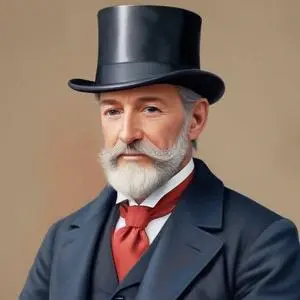
Johns Hopkins: The Philanthropist Who Shaped Education and Healthcare
A Legacy of Giving
Johns Hopkins is renowned for his extraordinary philanthropic contributions, which have had a lasting impact on education and healthcare. At the time of his death in 1873, he left behind a staggering bequest that would fund the establishment of numerous institutions, including the prestigious Johns Hopkins University and Hospital, cementing his legacy as a champion of social good.
Early Life and Career
Born on May 19, 1795, on a 500-acre tobacco plantation in Anne Arundel County, Maryland, Johns Hopkins was one of eleven children to Samuel Hopkins and Hannah Janney. He inherited his first name from his grandfather, Johns Hopkins, who received his name from his mother, Margaret Johns. At the tender age of 17, Hopkins left his family's plantation to start his career, eventually settling in Baltimore, Maryland, where he would remain for most of his life.
Rise to Prominence
Hopkins' business acumen and shrewd investments propelled him to success. He invested heavily in the Baltimore and Ohio Railroad, which led to his appointment as finance director of the company. He also served as president of the Baltimore-based Merchants National Bank. His support for
Abraham Lincoln and the Union during the American Civil War led to his Maryland residence becoming a gathering place for Union strategists.
A Commitment to Philanthropy
Throughout his life, Hopkins was driven by a strong sense of social responsibility. He was a Quaker and a staunch supporter of the abolitionist cause. Following the Civil War, he significantly increased his philanthropic giving, focusing on providing free medical facilities, orphanages, asylums, and schools to aid the poor and newly freed slave populations.
Institutions Bearing His Name
The bequests from Johns Hopkins' estate founded several institutions that would bear his name, including:
- Johns Hopkins Hospital
- Johns Hopkins University, including its academic divisions:
- Johns Hopkins School of Nursing
- Johns Hopkins School of Medicine
- Johns Hopkins Carey Business School
- Johns Hopkins Bloomberg School of Public Health
- Johns Hopkins School of Advanced International Studies
At the time, this was the largest philanthropic bequest ever made to an American educational institution.
Lasting Impact
Johns Hopkins' legacy extends far beyond the institutions that bear his name. His philanthropic efforts have had a profound impact on education, healthcare, and social justice. He remains an inspiration to generations, a testament to the power of generosity and compassion.
FAQ
What was Johns Hopkins role in the development of American philanthropy?
Johns Hopkins was a pioneering philanthropist who played a key role in the development of American philanthropy. He founded Johns Hopkins University and Hospital, which became models for philanthropic institutions across the country.
What was Johns Hopkins business career like?
Johns Hopkins was a successful businessman who made his fortune in the railroad industry. He was a shrewd investor and entrepreneur who built a business empire that spanned several industries.
What were Johns Hopkins views on education and healthcare?
Johns Hopkins believed that education and healthcare were essential pillars of a healthy society. He founded Johns Hopkins University and Hospital to provide access to high-quality education and healthcare to people from all walks of life.
What was Johns Hopkins legacy in American history?
Johns Hopkins legacy in American history is that of a pioneering philanthropist and businessman who helped to shape the countrys approach to philanthropy and healthcare.
What were Johns Hopkins personal qualities and characteristics?
Johns Hopkins was known for his strong work ethic, his business acumen, and his commitment to philanthropy. He was a quiet and unassuming individual who preferred to keep a low profile, despite his significant wealth and influence.