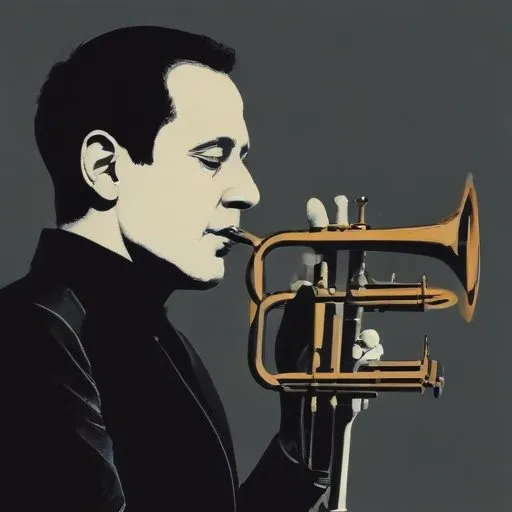
Jon Hassell: The Visionary Trumpeter and Composer Behind Fourth World Music
A Sonic Pioneer
Jon Hassell, the American trumpet player and composer, is renowned for developing the concept of Fourth World music, a unified primitive-futurist sound that combines elements of various world ethnic traditions with modern electronic techniques. This groundbreaking concept, first articulated on his 1980 collaboration with
Brian Eno,
Fourth World, Vol. 1: Possible Musics, has had a profound impact on the music world.
Early Life and Influences
Born in Memphis, Tennessee, on March 22, 1937, Hassell's fascination with music began at an early age. He pursued his master's degree from the Eastman School of Music in Rochester, New York, where he became deeply influenced by European serial music, particularly the work of Karlheinz Stockhausen.
A European Sojourn
In the early 1960s, Hassell enrolled in the Cologne Course for New Music, founded and directed by Stockhausen, where he met influential musicians
Irmin Schmidt and
Holger Czukay, who would later form the legendary band Can. This period of study had a profound impact on Hassell's musical approach, shaping his unique blend of avant-garde and world music.
A Career of Innovation
Hassell's diverse collaborations and projects showcase his restless creativity and innovative spirit. He worked with minimalist composers
Terry Riley on
In C (1968) and La Monte Young as part of his Theatre of Eternal Music group. His association with Brian Eno in the early 1980s introduced him to a broader audience, leading to collaborations with notable artists such as Talking Heads,
David Sylvian,
Peter Gabriel, and Tears for Fears.
Key Collaborations and Projects
- Dream House 78 17 (1974) with La Monte Young
- Fourth World, Vol. 1: Possible Musics (1980) with Brian Eno
- Power Spot (1986) with Farafina
- City: Works of Fiction (1990) with Ry Cooder
- Last Night the Moon Came Dropping Its Clothes in the Street (2009) with Moritz von Oswald
A Legacy of Influence
Hassell's pioneering work in Fourth World music has inspired a wide range of artists, from electronic musicians to rock bands. His unique blend of traditional and modern elements has expanded the boundaries of contemporary music, paving the way for new generations of musicians and composers.
Influence on Modern Society
Hassell's music has been featured in various films, television shows, and stage productions, demonstrating the broad appeal of his work. His innovative approach has also influenced the development of world music, encouraging cross-cultural exchange and collaboration.
Awards and Honors
Throughout his illustrious career, Hassell has received numerous awards and nominations, including a Grammy nomination for
Last Night the Moon Came Dropping Its Clothes in the Street (2009).
A Legacy of Creativity
Jon Hassell's life's work is a testament to his boundless creativity, innovative spirit, and dedication to pushing the boundaries of music. As a true original, he continues to inspire and influence musicians, composers, and audiences alike, leaving behind a legacy of sonic exploration and artistic innovation.
FAQ
What is Jon Hassells musical style?
Jon Hassells musical style is a unique blend of jazz, world music, and electronic music, often incorporating trumpet and synthesizers.
What is Jon Hassells most famous album?
Jon Hassells most famous album is Fourth World, Vol. 1: Possible Musics, which is considered a classic of experimental music.
Has Jon Hassell collaborated with other notable musicians?
Yes, Jon Hassell has collaborated with numerous notable musicians, including Brian Eno, Talking Heads, and Ry Cooder.
What is Jon Hassells concept of Fourth World music?
Jon Hassells concept of Fourth World music is a fusion of traditional and modern sounds, creating a new, futuristic musical landscape.
What is Jon Hassells background?
Jon Hassell was born in Memphis, Tennessee, and studied trumpet and music theory at the Eastman School of Music and the Hochschule für Musik in Cologne, Germany.