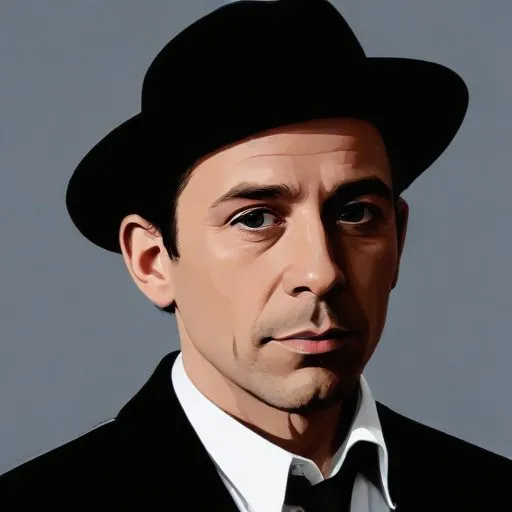
Jonathan Haze: The Unsung Hero of B-Movies and Cult Classics
The King of Campy Horror
Jonathan Haze is best known for his iconic role as Seymour Krelboin in the 1960 black comedy cult classic,
The Little Shop of Horrors. This performance cemented his status as a master of campy horror, and his association with the genre's maestro, Roger Corman.
Early Life and Discovery
Born Jack Schachter on April 1, 1929, in Pittsburgh, Pennsylvania, Haze's early life was marked by a strong connection to the arts. His cousin,
Buddy Rich, was a renowned jazz drummer, and Haze's own creative talents were soon to be discovered. While working at a gas station in California, Haze was spotted by Wyott Ordung, who was directing the movie
Monster from the Ocean Floor (1954) for
Roger Corman. This chance encounter led to Haze's debut in the film industry.
Corman's Protege
Haze's collaboration with Corman proved to be a fruitful one, with the actor appearing in numerous films over the next decade, including
Apache Woman (1955),
Day the World Ended (1955), and
It Conquered the World (1956). Corman's faith in Haze's abilities led to the actor taking on more significant roles, showcasing his range and versatility as a performer.
Branching Out
As Haze's career progressed, he began to explore other aspects of filmmaking. In 1957, he sold his first screenplay,
The Monster of Nicholson Mesa, a horror film parody. He went on to write the 1962 science fiction-comedy film
Invasion of the Star Creatures. Haze's behind-the-scenes work continued with production credits on films like
Premature Burial (1962) and
The Terror (1963).
Legacy and Impact
Jonathan Haze's contributions to the world of B-movies and cult classics are undeniable. His performances, often over-the-top and memorable, have become synonymous with the genre. While he may not have achieved mainstream recognition, Haze's influence can be seen in the work of many modern filmmakers who have been inspired by his campy charm.
Inspirational Quotes
- "I've always liked playing the goofy guy, the guy who's a little bit of a nerd." - Jonathan Haze
Trivia and Fun Facts
- Haze's cousin, Buddy Rich, was a famous jazz drummer.
- Haze worked as a gas station attendant before being discovered by Wyott Ordung.
- Haze appeared in over 20 films produced by Roger Corman.
Awards and Honors
While Haze's work may not have garnered him mainstream awards, his cult following and influence on the genre have earned him a special place in the hearts of B-movie enthusiasts.
FAQ
What is Jonathan Hazes most famous role?
Jonathan Hazes most famous role is that of Seymour Krelboyne in Roger Cormans The Little Shop of Horrors (1960). He also appeared in numerous other Corman films and B-movies.
How did Jonathan Haze get started in the film industry?
Jonathan Haze got started in the film industry through his connections with Roger Corman, who gave him his first film roles. He went on to work with Corman on numerous projects, both in front of and behind the camera.
What is Jonathan Hazes legacy in B-movies?
Jonathan Hazes legacy in B-movies is that of a cult hero who brought memorable characters to life on screen. He is beloved by fans of exploitation cinema and has inspired a new generation of filmmakers.
Did Jonathan Haze work behind the camera as well?
Yes, Jonathan Haze worked behind the camera as a screenwriter, producer, and director. He wrote several films, including The Terror (1963) and The Haunted World of El Superbeasto (2009).
What is Jonathan Hazes place in the history of American cinema?
Jonathan Hazes place in the history of American cinema is that of a pioneer of B-movies and exploitation cinema. He helped shape the genre and paved the way for future generations of filmmakers.