


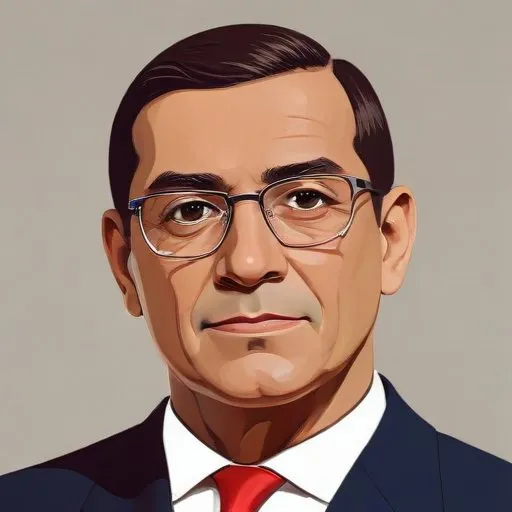
The 18th President of Portugal, a lawyer and politician, served from 1996 to 2006 and was a key figure in the country's transition to democracy. He's known for his commitment to social justice and human rights.
Jorge Sampaio, the 18th President of Portugal, is renowned for his unwavering commitment to democracy, human rights, and social justice. During his tenure from 1996 to 2006, he played a pivotal role in shaping the country's modern landscape, solidifying Portugal's position on the global stage, and leaving a lasting legacy that continues to inspire future generations.
Born on September 18, 1939, in Lisbon, Portugal, Jorge Sampaio grew up in a middle-class family with a strong sense of social responsibility. His father, Arnaldo Sampaio, was a prominent physician who promoted the National Vaccination Program, while his mother, Fernanda Bensade Branco, was a descendant of a Sephardi Jewish family from Morocco.
Sampaio's early life was marked by a strong sense of social justice, which was instilled in him by his parents. He attended Queen Elizabeth's School in Lisbon and later pursued a degree in law from the University of Lisbon. During his student years, he actively participated in the student crisis of the 1960s, fighting against the authoritarian regime of António de Oliveira Salazar.
In 1989, Sampaio became the leader of the Socialist Party, a position he held until 1992. His leadership skills and commitment to social justice earned him widespread recognition, and he was elected as the Mayor of Lisbon from 1990 to 1995. During his tenure, he implemented several reforms aimed at improving the lives of the city's inhabitants.
In 1996, Sampaio was elected as the President of Portugal, a position he held until 2006. His presidential tenure was marked by significant milestones, including the country's accession to the Eurozone, the relinquishing of Macau to China, and his efforts to resolve the East Timorese crisis.
Jorge Sampaio's legacy is multifaceted and far-reaching. He played a crucial role in shaping Portugal's modern identity, promoting democracy, and protecting human rights. His commitment to social justice and his efforts to resolve global conflicts have earned him numerous international accolades.
Sampaio's leadership style was characterized by his ability to bring people together, foster dialogue, and build consensus. His presidency was marked by a strong sense of social responsibility, and he worked tirelessly to promote Portugal's interests on the global stage.
Through his life and career, Jorge Sampaio has left an indelible mark on Portuguese history, inspiring future generations to strive for a more just and equitable world.
Sampaio was married to Maria José Rodrigues Ritta and had two children, Vera and André. He was an agnostic and did not consider himself a Jew, despite his maternal Sephardi Jewish heritage.
In his later years, Sampaio continued to be actively involved in public life, advocating for social causes and promoting human rights. He passed away on September 10, 2021, leaving behind a legacy that will be remembered for generations to come.
Jorge Sampaio's life was a testament to the power of vision, determination, and leadership. His commitment to social justice, human rights, and democracy continues to inspire and motivate people around the world.
Born in 1924
A Portuguese historian, lawyer, and politician who served as the 17th President of Portugal, known for leading the country's transition from authoritarianism to democracy. He played a key role in Portugal's decolonization and European integration.
77 Years Old
The first Portuguese to lead the United Nations, he's a champion of global cooperation, human rights, and sustainable development. He's a prominent voice on the world stage, advocating for climate action and social justice.
87 Years Old
The 19th President of the Portuguese Republic was a prominent economist and politician who served from 2006 to 2016, known for his economic reforms and leadership during the European sovereign-debt crisis. He is also a published author on economics and politics.
