


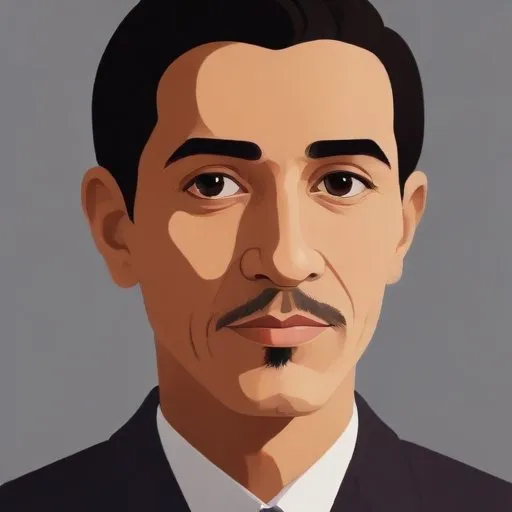
A Honduran philosopher and theorist who developed a philosophical system that integrated indigenous and European thought, and is known for his contributions to the development of Honduran identity and culture.
Known as the founder of the National Autonomous University of Honduras, Jos Trinidad Reyes was a pioneering priest who dedicated his life to fighting poverty, promoting education, and empowering women in Honduras. Through his writings and theatrical works, he left an indelible mark on the country's cultural and educational landscape.
Born on June 11, 1797, in San Miguel County, Tegucigalpa, Honduras, Jos Trinidad Reyes was the son of music teacher Felipe Santiago de Reyes and María Francisca Sevilla. He received his early education at a private school in Tegucigalpa, where he was taught reading and Catholic faith by Miss Gmé.
Reyes was a strong advocate for education, believing it to be the key to eradicating poverty and promoting social progress. He wrote several theatrical pastorelas, which not only established a foundation for Honduran theater but also promoted women's rights and education. His most notable work, a feminist manifesto published under the pseudonym Sofia Seyers, called for women's right to basic education, inspired by the ideas of the French Revolution.
Reyes' pastorelas featured strong female characters, challenging the traditional patriarchal norms of the time. His advocacy for women's rights was unprecedented in Honduras, and his work paved the way for future generations of women to fight for their rights.
In 1847, Reyes founded the National Autonomous University of Honduras, initially known as La Sociedad del Genio emprendedor y del buen gusto (The Society of the Enterprising Genius and Good Taste). The university aimed to provide education in matters of faith, culture, and science, further solidifying Reyes' commitment to education and social progress.
Reyes' cultural contributions extended beyond education and women's rights. He wrote several theatrical works, including the famous Navidad nuestra (Our Christmas), which has become a classic of Honduran contemporary theater. His works showcased a harmonious blend of different traditions, reflecting the country's rich cultural heritage.
Reyes was also influenced by the ideas of the Enlightenment, Humanism, and Religious Art, which shaped his views on the importance of the arts in civilizing and promoting progress in nations.
Jos Trinidad Reyes' legacy extends far beyond his contributions to education and culture. He fought against poverty, political fanaticism, and religious superstition, leaving a lasting impact on Honduran society. His commitment to empowering women and promoting education continues to inspire future generations.
Reyes' philosophical contributions centered around the importance of education, women's rights, and the role of the arts in promoting social progress. His ideas were influenced by the Enlightenment, Humanism, and Religious Art, reflecting his commitment to creating a more just and equitable society.
Born in 1780
A prominent figure in Central American politics, serving as Foreign Minister of Mexico and playing a key role in shaping the region's early 19th-century history. He's also remembered for his journalistic and literary contributions.
