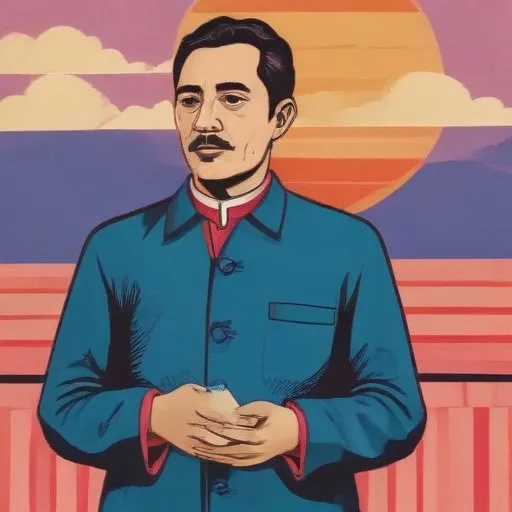
Jose Garcia Villa: The Filipino Poetic Visionary
The "Comma Poet" and His Unique Style
Jose Garcia Villa, a Filipino poet, critic, and painter, is renowned for his innovative and provocative writing style, which earned him the nickname "The Comma Poet." Born on August 5, 1908, in Singalong, Manila, Philippines, Villa is celebrated for his pioneering work in modernist poetry, experimenting with unconventional syntax, and exploring themes of identity, spirituality, and existentialism.
Early Life and Education
Villa's early life was marked by a deep love for literature and music. He was the youngest of nine children to a middle-class family and was heavily influenced by his mother's storytelling and his father's passion for music. Villa's interest in writing began at a young age, and he started composing poems and short stories in both English and Tagalog. He pursued higher education at the University of the Philippines, where he earned a Bachelor of Arts degree in 1929.
Career Highlights and Major Works
Villa's writing career spanned over five decades, during which he published numerous collections of poetry, including
(1942), Volume Two (1949), and The Essential Villa (1965). His most notable work, Have Come, Am Here, is considered a landmark in modern Filipino poetry, showcasing his unique style and exploring themes of identity, love, and mortality.
Philosophical Contributions and Beliefs
Villa's poetry is deeply rooted in his philosophical beliefs, which were greatly influenced by his Catholic upbringing and interest in Eastern mysticism. He believed in the power of poetry to transcend the mundane and tap into the spiritual, often exploring themes of existentialism, the nature of reality, and the human condition.
Influence on Modern Society
Villa's work had a significant impact on modern Filipino literature, inspiring a new generation of writers to experiment with form and style. His innovative approach to poetry paved the way for a more expressive and avant-garde movement in Philippine literature. Moreover, his contributions to modernist poetry have influenced writers globally, earning him recognition as one of the pioneers of 20th-century poetry.
Awards and Honors
Throughout his career, Villa received numerous awards and honors for his contributions to literature. In 1973, he was awarded the National Artist Award for Literature, the highest honor given to Filipino artists. He also received the Order of the Golden Heart, a prestigious award for outstanding achievement in the arts.
Personal Milestones and Key Life Events
In 1930, Villa traveled to the United States, where he settled in New York City and became an integral part of the city's vibrant literary scene. During this period, he befriended prominent writers and intellectuals, including E.E. Cummings and Jean Cocteau. Villa's experiences in the United States greatly influenced his writing, as he explored themes of displacement, identity, and cultural hybridity.
Controversies and Public Perception
Villa's unconventional writing style and provocative themes often sparked controversy, with some critics accusing him of obscurity and pretentiousness. However, his defenders argued that his unique style was a reflection of his genius and innovative spirit. Despite these controversies, Villa remained committed to his art, continuing to push the boundaries of poetry and literature.
Quotes and Memorable Sayings
"I am not a poet, I am a poem."
Villa's words reflect his deep connection to his craft, underscoring the idea that poetry is not just a form of expression, but a way of being.
Legacy and Impact
Jose Garcia Villa's contributions to modern poetry are immeasurable. His innovative style, philosophical depth, and cultural significance have left an indelible mark on Filipino literature and beyond. As a poet, critic, and painter, Villa's work continues to inspire generations of writers, artists, and intellectuals, cementing his place as one of the most important literary figures of the 20th century.
FAQ
What was Jose Garcia Villas contribution to Philippine literature?
Jose Garcia Villa was a Filipino poet, short story writer, and painter who made significant contributions to Philippine literature. He is known for his innovative style, which blended elements of modernism and surrealism.
What was Jose Garcia Villas writing style?
Jose Garcia Villas writing style was characterized by his use of imagery, symbolism, and experimentation with language. He was known for his vivid descriptions of nature and his exploration of themes such as identity, morality, and social justice.
What were Jose Garcia Villas most famous works?
Jose Garcia Villas most famous works include his poetry collections, such as Have Come, Am Here and Volume Two, as well as his short story collections, such as Footnote to Youth.
How did Jose Garcia Villas work influence Philippine literature?
Jose Garcia Villas work had a significant impact on Philippine literature, paving the way for future generations of writers to experiment with form and style.
What is Jose Garcia Villas legacy in Philippine culture?
Jose Garcia Villas legacy in Philippine culture is one of innovation and creativity. He is remembered as a pioneer of modern Philippine literature and a true original in the world of literature and art.