


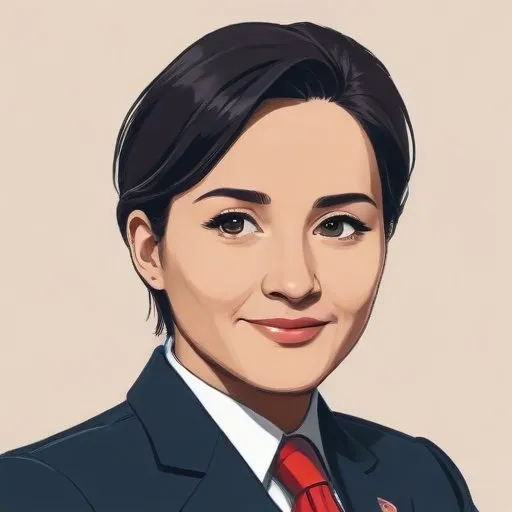
The 8th Canadian Minister of Intergovernmental Affairs, a prominent figure in Canadian politics, known for her contributions to national unity and provincial relations. She played a key role in shaping Canada's federal-provincial dynamics.
Jose Verner, a Canadian politician, is renowned for her distinguished career in the House of Commons of Canada, serving as a member of the Conservative Party of Canada and later as a minister in the Cabinet of Prime Minister Stephen Harper. She is particularly recognized for her roles as Minister of Intergovernmental Affairs, President of the Queen's Privy Council for Canada, and Minister for La Francophonie, showcasing her expertise in intergovernmental relations and Francophone affairs.
Born on December 30, 1959, Verner's entrance into the world of politics was preceded by her experience as a political staffer in Quebec City, where she worked in the Robert Bourassa government. This foundation in public service would serve her well in her subsequent political endeavors.
Verner's political career spans over two decades, during which she has been affiliated with the Action démocratique du Québec (ADQ) and the Conservative Party of Canada. Her dedication to public service led her to contest the 2004 federal election, where she finished second with 31% of the vote, marking the Conservative Party's best showing in Quebec.
In 2006, Verner's perseverance paid off as she won the election with an impressive 57.68% of the vote in Louis-Saint-Laurent, defeating Bloc Québécois candidate Bernard Clermont. This victory led to her appointment as a minister in Prime Minister Stephen Harper's cabinet, where she served in various capacities.
Verner's contributions to Canadian politics have been significant, particularly in the realm of intergovernmental affairs and Francophone issues. Her experience and expertise have played a crucial role in shaping the nation's politics, and her legacy continues to inspire future generations of politicians.
Following the 2011 federal election, Verner lost her Commons seat but was appointed to the Senate of Canada on June 13, 2011. This appointment marked a new chapter in her political career, allowing her to continue serving the nation in an esteemed capacity.
67 Years Old
The 22nd Prime Minister of Canada, a conservative leader who served from 2006 to 2015, known for his fiscal policies and controversial stances on social issues. He led the country through the 2008 financial crisis and implemented significant changes to Canada's tax system.
92 Years Old
The 20th Prime Minister of Canada, serving from 1993 to 2003, known for his leadership during the Quebec sovereignty movement and his role in shaping Canada's national unity. He implemented policies like the Clarity Act and the National Child Benefit.
45 Years Old
American professional ice hockey player who won two Stanley Cup championships and was a four-time NHL All-Star. Known for his rugged defensive play and physical presence on the ice.
71 Years Old
A Canadian politician and sociologist who served as Minister of the Environment, known for his advocacy on climate change and implementation of the Kyoto Protocol. He led the Liberal Party of Canada and was a key figure in shaping the country's environmental policies.
79 Years Old
A Canadian journalist and politician who served as the leader of the Liberal Party of Canada and was a prominent public intellectual, known for his writings on politics, history, and human rights.
54 Years Old
The 23rd Prime Minister of Canada, known for his progressive policies and charismatic leadership, has been a prominent figure in Canadian politics since 2015. He has been a strong advocate for climate action, diversity, and inclusion.
61 Years Old
A Canadian lawyer and politician who served as the Minister of Justice, known for his efforts in shaping the country's justice system and advocating for victims' rights.
