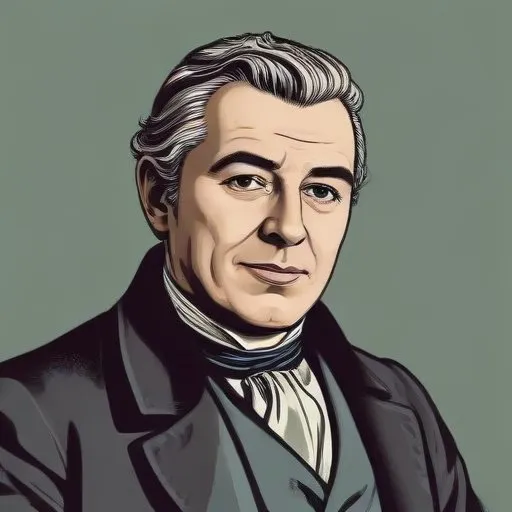
Joseph Banks Rhine: The Father of Modern Parapsychology
Founding a New Science
Joseph Banks Rhine, affectionately known as J.B. Rhine, was an American botanist who defied conventional norms by delving into the realm of the paranormal. He is renowned for founding parapsychology as a branch of psychology, a discipline that seeks to understand phenomena beyond the confines of traditional scientific inquiry.
Early Life and Education
Born on September 29, 1895, in Waterloo, Pennsylvania, Rhine was the second of five children to Samuel Ellis Rhine and Elizabeth Vaughan Rhine. His family relocated to Marshallville, Ohio, during his early teenage years. Rhine pursued higher education at Ohio Northern University, the College of Wooster, and later at the University of Chicago, where he earned his master's degree in botany in 1923 and a Ph.D. in botany in 1925.
The Awakening of Interest
A turning point in Rhine's life came in 1922, when he and his wife,
Louisa E. Rhine, attended a lecture by
Arthur Conan Doyle, which sparked his fascination with the possibility of communication with the dead. This interest was further kindled by reading
Oliver Lodge's book,
The Survival of Man, which explored mediumship and life after death.
Academic Pursuits
Rhine's academic journey continued at the Boyce Thompson Institute for Plant Research in Yonkers, New York, where he taught for a year. He then enrolled in the psychology department at Harvard University, studying under Professor
William McDougall for a year. In 1927, Rhine moved to Duke University in Durham, North Carolina, to work under McDougall's guidance.
The Birth of Parapsychology
At Duke University, Rhine began conducting studies that would lay the foundation for parapsychology as a branch of science. He approached parapsychology as a subset of abnormal psychology, exploring phenomena such as telepathy, clairvoyance, and psychokinesis.
Founding Institutions and Publications
Rhine's pioneering work led to the establishment of several institutions and publications that would shape the field of parapsychology. These include:
- The Parapsychology Laboratory at Duke University
- The Journal of Parapsychology
- The Foundation for Research on the Nature of Man
- The Parapsychological Association
Major Works
Rhine authored two influential books that cemented his position as a leading authority in parapsychology:
- Extrasensory Perception
- Parapsychology: Frontier Science of the Mind
Influence on Modern Society
Rhine's work has had a profound impact on modern society, inspiring countless researchers, writers, and filmmakers to explore the realms of the paranormal. His legacy continues to shape our understanding of the human experience, encouraging us to venture beyond the boundaries of conventional science.
Philosophical Contributions and Beliefs
Rhine's philosophical contributions lie in his unwavering commitment to the scientific method, even when exploring phenomena that challenged traditional scientific norms. He believed that the human mind possessed capabilities that transcended the physical realm, and that a deeper understanding of these abilities could lead to a more profound comprehension of human nature.
Personal Milestones and Key Life Events
Throughout his life, Rhine was driven by an insatiable curiosity and a passion for discovery. He remained dedicated to his work, even in the face of criticism and skepticism, and continued to contribute to the field of parapsychology until his passing on February 20, 1980.
Legacy
Joseph Banks Rhine's pioneering work has left an indelible mark on the scientific community. As the father of modern parapsychology, he has inspired generations of researchers, thinkers, and explorers to venture into the unknown, seeking to understand the mysteries that lie beyond the reaches of conventional science.