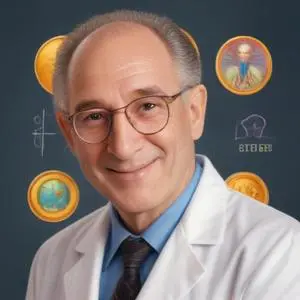
Joseph L. Goldstein: The Nobel Laureate Who Revolutionized Cholesterol Research
A Pioneer in Biochemistry
Joseph L. Goldstein is a renowned American biochemist who, along with his colleague Michael Brown, was awarded the Nobel Prize in Physiology or Medicine in 1985 for their groundbreaking discovery of the low-density lipoprotein (LDL) receptor, which plays a crucial role in removing cholesterol from the blood. This pioneering work has led to a fundamental shift in our understanding of cholesterol metabolism and has paved the way for the development of statin drugs, which have become a cornerstone of modern cardiovascular disease treatment.
Early Life and Education
Born on April 18, 1940, in Kingstree, South Carolina, Goldstein was the son of Fannie Alpert and Isadore E. Goldstein, who owned a clothing store. His family is Jewish. Goldstein received his Bachelor of Science degree from Washington and Lee University in 1962 and went on to earn his MD from the University of Texas Southwestern Medical School in 1966.
Career Highlights and Major Works
After completing his residency, Goldstein moved to the National Institutes of Health (NIH) in Bethesda, Maryland, where he worked in biochemical genetics. In 1972, he relocated back to the Southwestern Medical Center, accepting a post as the head of the Division of Medical Genetics. It was during this period that he collaborated extensively with Michael Brown, with whom he published over 100 major papers between 1973 and 1985. Their work focused on the genetics of cholesterol metabolism, and their discoveries have had a profound impact on our understanding of this complex process.
Discovery of the LDL Receptor
Goldstein and Brown's most significant discovery was the identification of the LDL receptor, a protein that removes excess cholesterol from the bloodstream. Their research showed that when LDL receptors are not present in sufficient numbers, individuals develop hypercholesterolemia and are at risk for cholesterol-related diseases, including coronary heart disease.
Awards and Honors
In addition to the Nobel Prize, Goldstein has received numerous awards and honors for his contributions to biochemistry and medicine. He is a member of the National Academy of Sciences and has been awarded the National Medal of Science, the Albert Lasker Award, and the Louisa Gross Horwitz Prize from Columbia University.
Philosophical Contributions and Beliefs
Goldstein's work has not only shed light on the biological mechanisms underlying cholesterol metabolism but has also had significant implications for our understanding of the interplay between genetics and environment in disease development. His discoveries have highlighted the importance of early intervention and prevention in managing cardiovascular disease, and his research has emphasized the need for a multidisciplinary approach to understanding complex biological systems.
Influence on Modern Society
Goldstein's work has had a profound impact on modern society, leading to the development of statin drugs, which have become a cornerstone of cardiovascular disease treatment. His research has also raised awareness about the importance of cholesterol management and the need for early intervention in preventing cardiovascular disease.
Personal Milestones and Key Life Events
Throughout his career, Goldstein has been driven by a passion for scientific discovery and a commitment to advancing our understanding of human biology. His collaboration with Michael Brown has been a defining feature of his career, and their partnership has led to some of the most significant breakthroughs in biochemistry.
Legacy and Impact on the Field
Goldstein's work has left an indelible mark on the field of biochemistry, and his discoveries have paved the way for future generations of researchers. His legacy continues to inspire and motivate scientists working in the fields of cholesterol metabolism, cardiovascular disease, and genetics.
Comparative Analysis with Contemporaries
Goldstein's work has been compared to that of other Nobel laureates, including Michael Brown, with whom he shared the Nobel Prize. Their collaboration has been cited as an example of the power of interdisciplinary research and the importance of collaboration in advancing scientific knowledge.
Visual Timeline and Milestones
- 1940: Born in Kingstree, South Carolina
- 1962: Received Bachelor of Science degree from Washington and Lee University
- 1966: Earned MD from the University of Texas Southwestern Medical School
- 1972: Became head of the Division of Medical Genetics at the Southwestern Medical Center
- 1973-1985: Collaborated with Michael Brown, publishing over 100 major papers
- 1985: Awarded the Nobel Prize in Physiology or Medicine
Trivia and Fun Facts
- Goldstein's family is Jewish, and his parents owned a clothing store.
- He has been listed in Thomson Reuters' index of highly cited authors.
Inspirational Stories and Motivations
Goldstein's story serves as a testament to the power of dedication, hard work, and collaboration in achieving scientific breakthroughs. His passion for discovery and his commitment to advancing our understanding of human biology have inspired generations of scientists and continue to motivate researchers working in the fields of biochemistry and medicine.
FAQ
What is Joseph L. Goldsteins Nobel Prize-winning research?
Joseph L. Goldstein is an American biochemist and geneticist who was awarded the Nobel Prize in Physiology or Medicine in 1985 for his research on the regulation of cholesterol metabolism. His work has had a major impact on our understanding of cardiovascular disease.
What is Joseph L. Goldsteins approach to biological research?
Joseph L. Goldsteins approach to biological research is characterized by a strong emphasis on interdisciplinary collaboration and a rigorous commitment to scientific inquiry. He has worked at the interface of biochemistry, genetics, and physiology to understand the complexities of biological systems.
What is Joseph L. Goldsteins most notable discovery?
One of Joseph L. Goldsteins most notable discoveries was the identification of the low-density lipoprotein (LDL) receptor, a crucial protein involved in cholesterol metabolism. His work has led to the development of new treatments for cardiovascular disease.
How has Joseph L. Goldsteins work influenced biomedical research?
Joseph L. Goldsteins work has had a profound impact on biomedical research, particularly in the areas of cardiovascular disease and lipid metabolism. He has also been a vocal advocate for the importance of basic scientific research in improving human health.
What awards has Joseph L. Goldstein won for his research?
Joseph L. Goldstein has won numerous awards for his research, including the Nobel Prize, the National Medal of Science, and the Albert Lasker Award.