


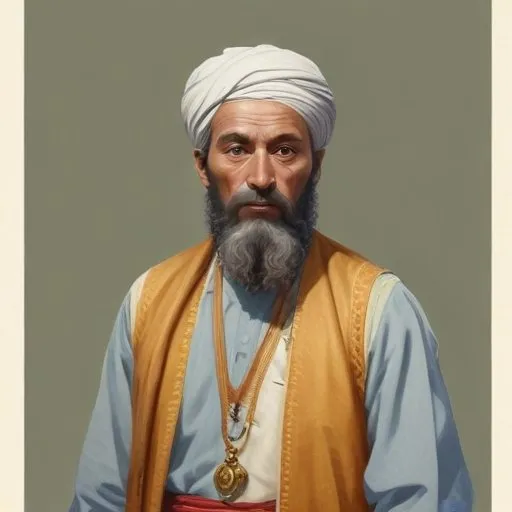
A French expert in Asian languages and cultures, deciphering ancient texts and uncovering the secrets of Chinese history.
Joseph de Guignes, a renowned French orientalist, sinologist, and Turkologist, is celebrated for his groundbreaking contributions to the fields of Eastern languages, history, and culture. Born on October 19, 1721, in Pontoise, France, Guignes left an indelible mark on the academic community with his meticulously researched works on the origins of the Huns, Turks, and other Tartaric peoples.
Guignes was the son of Jean Louis de Guignes and Françoise Vaillant. His fascination with Eastern languages and cultures led him to succeed Étienne Fourmont as secretary-interpreter of the Eastern languages at the Royal Library. This prestigious position enabled him to delve deeper into the mysteries of the Orient, ultimately earning him admission to the Royal Society of London in 1752.
Guignes' magnum opus, Histoire générale des Huns, des Mongoles, des Turcs et des autres Tartares occidentaux (1756-1758), is a five-volume masterpiece that explores the historical origins of the Huns, Mongols, Turks, and other Western Tartaric peoples. This seminal work not only showcased his exceptional scholarship but also introduced the revolutionary idea that the Huns who attacked the Roman Empire were, in fact, the same people as the Xiongnu mentioned in Chinese records.
This theory, though debated by central Asianists, was popularized by Edward Gibbon in his iconic work, Decline and Fall of the Roman Empire. Guignes' other notable contribution was his research on the connection between Egyptian hieroglyphs and Chinese characters, although his claim that the former derived from the latter has since been disproven.
In 1754, Guignes became an associate of the French Academy of Inscriptions, and in 1757, he was appointed to the chair of Syriac at the Collège de France. These distinguished appointments underscored his reputation as a leading scholar of Eastern languages and cultures.
Despite some of his theories being challenged or disproven, Guignes' work remains a testament to his dedication to understanding the complexities of the Orient. His research paved the way for future generations of scholars, influencing the development of sinology, Turkology, and Mongolian studies.
Guignes' legacy extends beyond the academic realm, as his findings have also contributed to a deeper understanding of cultural exchange and the dynamics of empires throughout history. His meticulous scholarship and groundbreaking ideas have left an enduring mark on the world of oriental studies.
Joseph de Guignes' remarkable journey, marked by his unwavering passion for understanding the mysteries of the East, has left an indelible mark on the world of oriental studies. As we delve into the intricacies of his life and work, we are reminded of the power of scholarship to bridge cultural divides and illuminate the complexities of human history.
Born in 1878
A renowned French sinologist and explorer who deciphered ancient Chinese scripts and discovered the Dunhuang manuscripts, a treasure trove of Buddhist and Chinese history.
