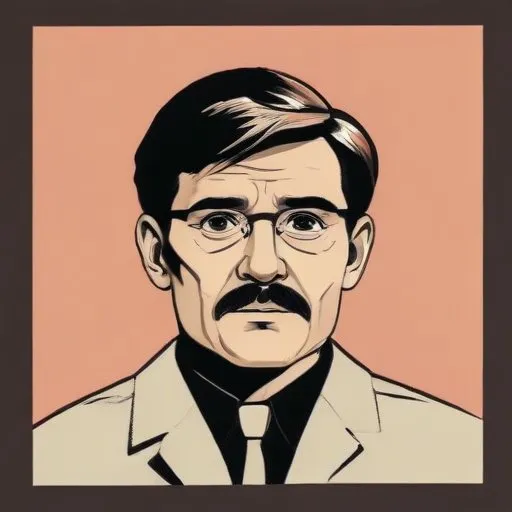
Jrn Donner: The Multifaceted Maestro of Finnish Cinema and Politics
A Legacy of Cinematic Excellence and Political Prowess
Jrn Donner is renowned for producing
Ingmar Bergman's iconic film, Fanny and Alexander, which swept four Academy Awards in 1984. This Finnish phenomenon's achievements, however, extend far beyond the realm of cinema, as he made significant contributions to politics, serving in both the Finnish parliament and the European Parliament.
A Life of Diverse Pursuits
Born into the Finland-Swedish Donner family of German descent, Jrn Donner was the son of linguist Kai Donner and the grandson of linguist and politician Otto Donner. This illustrious heritage set the stage for his multifaceted career, which would traverse the realms of cinema, politics, and literature.
The Cinematic Sphere
Donner's filmography boasts an impressive array of works, including En søndag i september (A Sunday in September, 1963) and Att älska (To Love, 1964). His role as director of the Swedish Film Institute further solidified his presence in the cinematic world. In 1979, he was a member of the jury at the 29th Berlin International Film Festival, underscoring his reputation as a discerning connoisseur of film.
Political Pursuits
Donner's foray into politics was marked by his association with various parties, including the SDP and RKP. He served as a member of both the Finnish parliament and the European Parliament, leveraging his unique perspective to shape policy and legislation.
Literary Accomplishments
In addition to his cinematic and political endeavors, Donner was a skilled writer. His novel, Far och son (Father and Son), garnered the prestigious Finlandia Prize in 1985, cementing his position as a literary force to be reckoned with.
Awards and Honors
- Academy Award for Best Foreign Language Film for Fanny and Alexander (1984)
- Finlandia Prize for Far och son (Father and Son, 1985)
Personal Life and Legacy
Donner's life was marked by both triumph and turmoil. He battled prostate and lung cancers, ultimately succumbing to lung disease on January 30, 2020, just six days shy of his 87th birthday. A treasure trove of photographs, showcasing his hitherto unknown talent as a skilled photographer, was discovered at his home after his passing.
A Complex and Multifaceted Legacy
Jrn Donner's remarkable life serves as a testament to the power of creative expression and civic engagement. As a cinematic trailblazer, literary luminary, and dedicated politician, his influence continues to reverberate throughout Finnish society and beyond. His remarkable story, replete with twists and turns, serves as a poignant reminder that even the most seemingly disparate pursuits can converge to form a rich tapestry of human experience.
FAQ
What was Jörn Donners role in Finnish cinema?
Jörn Donner was a Finnish director and screenwriter who made significant contributions to Finnish cinema, particularly in the 1960s and 1970s.
What are some of Jörn Donners notable films?
Jörn Donners notable films include Black on White (1968), Sixty Days (1969), and Run, Run (1987)
What was Jörn Donners style of filmmaking?
Jörn Donners style of filmmaking was characterized by its realism and attention to detail. He was interested in exploring themes of social inequality and personal struggle.
Did Jörn Donner work in other areas of the arts?
Jörn Donner also worked as a writer and critic, and was a prominent figure in Finnish cultural life.
What is Jörn Donners legacy in Finnish cinema?
Jörn Donners legacy in Finnish cinema is that of a pioneering filmmaker who helped shape the countrys film industry. His works continue to be celebrated and studied today.