


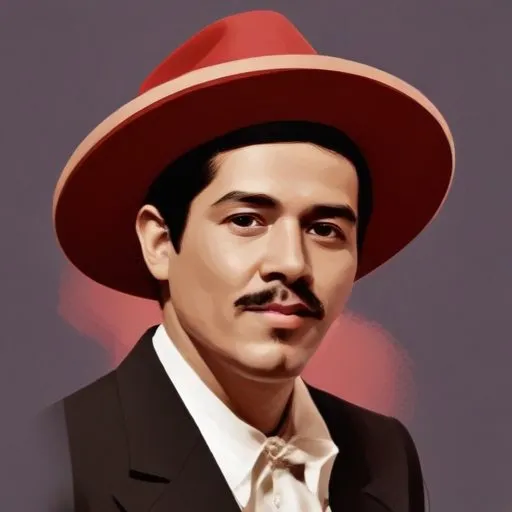
A pioneer of lounge music and space age pop, blending traditional Mexican music with futuristic electronic elements, creating a unique and quirky sound.
Juan Garcia Esquivel was a Mexican band leader, pianist, and composer who reigned supreme in the realm of instrumental music, blending lounge, jazz, and Latin flavors to create a unique sound that captivated audiences worldwide. Dubbed "The King of Space Age Pop" and "The Busby Berkeley of Cocktail Music," Esquivel's innovative style continues to inspire and delight music enthusiasts to this day.
Born on January 20, 1918, in Tampico, Tamaulipas, Mexico, Esquivel's family moved to Mexico City in 1928, where he began his musical journey as a self-taught prodigy. At the tender age of 6, Esquivel would mesmerize older musicians with his piano skills, and by his own account, he continued to shun formal training, opting instead to learn from books and through active listening.
Esquivel's music defied categorization, but his signature sound is characterized by exotic percussion, wordless vocals, virtuoso piano runs, and dramatic dynamic shifts. He drew upon jazz elements, but his meticulously arranged compositions were anything but improvisational. As a perfectionist, Esquivel exercised total control over his music, from performance to recording.
Novel instrumental combinations were a hallmark of Esquivel's style, incorporating Chinese bells, mariachi bands, whistling, and other unconventional elements to create a distinctive sonic tapestry.
Throughout his illustrious career, Esquivel composed and performed for various television shows, films, and albums. Some of his most notable works include:
Esquivel's influence extends far beyond the realm of music. His Space Age Pop aesthetic has inspired countless artists, designers, and filmmakers, influencing the visual and stylistic language of the 1950s and 1960s.
From film soundtracks to advertising jingles, Esquivel's music has permeated popular culture, with his songs featuring in films like "The Apartment" (1960) and "Ocean's 11" (1960), as well as in numerous television shows and commercials.
Juan Garcia Esquivel's legacy is that of a true innovator and trailblazer. His music continues to enchant audiences today, transcending genres and generations. As a pioneering figure in the development of lounge music and Space Age Pop, Esquivel's influence will be felt for years to come.
Born in 1916
A Cuban-Mexican music icon who popularized the mambo style, blending Afro-Cuban rhythms with American jazz and swing, creating a unique sound that swept the globe in the 1950s.
Born in 1900
This charismatic Spanish-American entertainer was a pioneer of Latin music, blending rumba and tango styles with American jazz, and starring in numerous Hollywood films and TV shows. He's most famous for his iconic hits like "Perfidia" and "Brazil".
Born in 1922
A renowned pianist and composer who crafted exotic, jazzy scores for films and TV shows, evoking a sense of tropical paradise and retro futurism.
Born in 1911
A pioneer of exotica music, blending jazz and tropical rhythms to create a unique sound that evokes a sense of escapism and luxury. Known for his iconic album "Quiet Village".
Born in 1917
A renowned trumpet player, composer, and conductor, known for his lush orchestral arrangements and iconic film scores, particularly in the realm of light music and easy listening.
Born in 1909
A popular bandleader and composer of the 1940s and 1950s, known for his lush orchestral arrangements and hit songs like "Count Every Star" and "Vanessa".
