


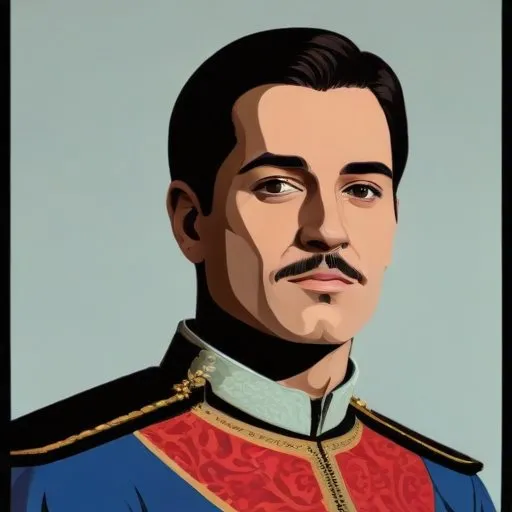
A 14th-century Spanish nobleman and writer, known for his literary works, particularly "El Conde Lucanor", a collection of tales and fables that showcase his storytelling skills and insight into human nature.
Juan Manuel, Prince of Villena, is renowned for his remarkable literary contributions, particularly his celebrated book "El Conde Lucanor," a collection of tales and fables that showcase his mastery of storytelling. As a member of the royal family and a skilled writer, Juan Manuel's works have had a profound impact on Spanish literature, earning him a place among the greatest authors of the Middle Ages.
Born in 1282, Juan Manuel was a member of the royal family of Castile, being the son of Prince Manuel of Castile and Constance of Aragon. His ancestry was steeped in nobility, with his great-grandfather being King Ferdinand III of Castile. From a young age, Juan Manuel was exposed to the world of politics and literature, which would later shape his pursuits.
Juan Manuel's magnum opus, "El Conde Lucanor," is a testament to his skill as a storyteller and philosopher. The book is a collection of 51 tales, each exemplifying a moral lesson or teaching. Through his writing, Juan Manuel conveyed his philosophical beliefs, emphasizing the importance of ethics, morality, and wisdom. His work showcases a deep understanding of human nature, offering insights into the complexities of human relationships and the consequences of one's actions.
"El Conde Lucanor" is considered one of the most influential works of Spanish literature, rivaling the likes of "The Canterbury Tales" and "The Decameron." The book's significance lies in its ability to convey moral lessons through engaging narratives, making it accessible to a wide audience. Juan Manuel's writing style, which blended wisdom with wit, has been praised for its innovation and creativity.
In addition to "El Conde Lucanor," Juan Manuel wrote several other notable works, including "The Tales of_Count Lucanor" and "The Book of Patronio." His writing often explored themes of chivalry, honor, and morality, reflecting his experiences as a member of the royal family. Juan Manuel's works have been translated into various languages, solidifying his reputation as a master storyteller.
Juan Manuel's literary contributions have had a lasting impact on Spanish literature and beyond. His works have inspired numerous authors, including the celebrated Spanish writer, Cervantes. Furthermore, Juan Manuel's emphasis on moral values and ethics has influenced the development of Spanish culture and society.
Throughout his life, Juan Manuel was involved in various political and military endeavors, serving as the governor of several regions in Castile. He was also a skilled hunting enthusiast and wrote extensively on the subject. Despite his numerous accomplishments, Juan Manuel's life was not without controversy, and he faced opposition from various factions within the royal family.
Juan Manuel's life and works are a testament to the rich cultural heritage of Spain during the Middle Ages. His contributions to literature have earned him a place among the greatest authors of the period. As a member of the royal family, Juan Manuel's life was intertwined with the complex web of politics and power struggles that defined the era.
Juan Manuel, Prince of Villena, was a true Renaissance man – a skilled author, nobleman, and philosopher. His remarkable literary contributions continue to inspire and captivate readers to this day, solidifying his place as one of the most celebrated figures of the Middle Ages.
Born in 1405
King of Castile from 1406 to 1454, known for his struggles to maintain power and stability in a tumultuous kingdom, marked by conflicts with nobles and the rise of the Catholic Monarchs.
Born in 1405
King of Castile from 1406 to 1454, known for his struggles to maintain power and stability in a tumultuous kingdom, marked by conflicts with nobles and the rise of the Catholic Monarchs.
