


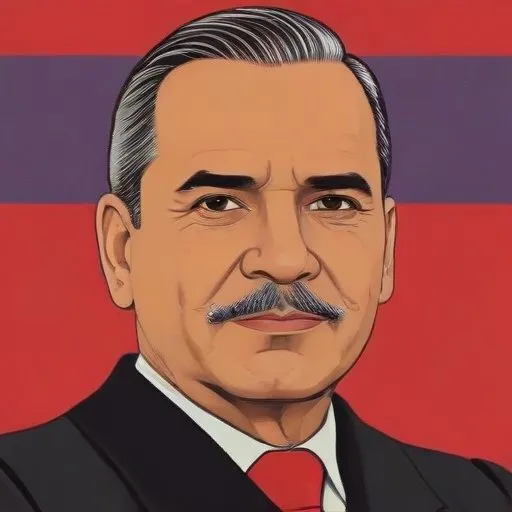
American colonel, judge, and politician who served as the 101st Mayor of San Antonio, known for his leadership and contributions to the city's development. He played a significant role in shaping the city's infrastructure and economy.
Juan Segun, a Spanish-Tejano politician and military figure, is renowned for his pivotal role in the Texas Revolution, fighting for the independence of Texas from Mexico. As a dedicated leader, he played a crucial part in shaping the course of Texas history, earning him a lasting legacy in the Lone Star State.
Born on October 27, 1806, in San Antonio de Bexar, Province of Texas, Viceroyalty of New Spain, Juan Nepomuceno Seguin was the son of Juan Jos María Erasmo Seguin and Maria Josefa Becerra, both Spanish settlers from the Canary Islands. Growing up in a family deeply rooted in politics, Seguin's father was a postal administrator and one of the drafting rapporteurs for the Mexican Constitution of 1824. This early exposure instilled in him a strong sense of civic duty and a keen interest in politics.
Seguin's entry into politics began in 1828, when he was elected as an alderman. He subsequently served on numerous electoral boards and became the San Antonio alcalde mayor in 1833. His leadership skills and dedication to the community earned him the position of political chief of Bexar in 1834, following the illness of the previous chief.
In 1835, Seguin's strong opposition to Mexican President Antonio López de Santa Anna's repeal of the Mexican Constitution of 1824 propelled him to join the Texas Revolution. He recruited and commanded troops for the Texian Army, supplying them with food and provisions. Commissioned as a captain by Stephen F. Austin, Seguin played a vital role in the early battles, including the successful Battle of Concepción.
Today, Juan Seguin's legacy is a testament to his unwavering commitment to the people of Texas. Numerous places and institutions bear his name, including the county seat of Seguin in Guadalupe County, the Juan N. Seguin Memorial Interchange in Houston, and the Juan Seguin Monument in Seguin. His contribution to the Texas Revolution has been immortalized in history, solidifying his place as a Texas legend.
In 1825, Seguin married María Gertrudis Flores de Ábrego, with whom he had ten children. His family life was marked by love, dedication, and a strong sense of responsibility, traits that would later define his public life.
Juan Seguin's fight for independence not only shaped the course of Texas history but also paved the way for the state's future growth and development. His selflessness, bravery, and perseverance continue to inspire generations, serving as a beacon of hope for those fighting for freedom and justice.
Born in 1793
First president of the Republic of Texas, leading the fight for independence from Mexico and later becoming a US senator and governor. Known for his bravery and strong leadership during Texas's formative years.
Born in 1793
Pioneer of Texas colonization, instrumental in bringing American settlers to the region, and played a key role in the fight for Texas independence.
