


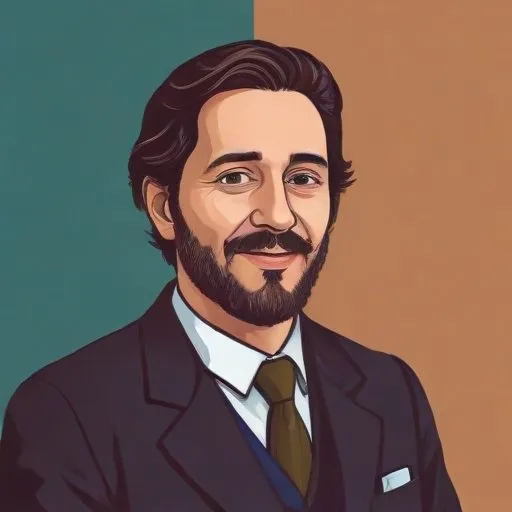

Judah Folkman: The Visionary Behind Angiogenesis Research
Judah Folkman, a renowned American biologist and pediatric surgeon, is best known for his groundbreaking research on tumor angiogenesis, the process by which a tumor attracts blood vessels to nourish itself and sustain its existence. His pioneering work in this field has led to the discovery of numerous therapies based on inhibiting or stimulating neovascularization, revolutionizing the fight against cancer and other diseases.
Early Life and Inspiration
Born on February 24, 1933, in Cleveland, Ohio, Judah Folkman grew up with a deep sense of compassion and a desire to heal. His father, a rabbi, would often take him on hospital visits, where he witnessed the comfort and solace his father brought to patients. By the age of seven, Folkman knew he wanted to follow a different path, becoming a doctor to offer cures alongside comfort. His father's words of encouragement, "In that case, you can be a rabbi-like doctor," had a profound impact on his future.
Education and Early Career
Folkman graduated from Ohio State University in 1953 and went on to attend Harvard Medical School, where he trained under the guidance of Robert Edward Gross. During his time at Harvard, he worked on a prototype pacemaker, although he never published his findings. In 1960, his residency was interrupted when he was drafted into the United States Navy, where he conducted research at the National Naval Medical Center in Bethesda, Maryland, until 1962.
The Discovery of Angiogenesis
While working for the Navy, Folkman's research focused on developing artificial blood. During an experiment, he observed that tumors in rabbit thymus glands couldn't grow when perfused with blood. This intriguing phenomenon sparked his curiosity, leading him to investigate the process of angiogenesis. After completing his Navy service, Folkman returned to Massachusetts General Hospital to complete his residency and began to delve deeper into the mysteries of angiogenesis.
Breakthroughs and Contributions
- Founding the field of angiogenesis research, which has led to the development of numerous therapies for cancer and other diseases.
- Published the landmark paper "Tumor Angiogenesis: Therapeutic Implications" in 1971, which introduced the concept of angiogenesis as a potential target for cancer treatment.
- Discovered the first angiogenesis inhibitor, Cartilage-Derived Inhibitor (CDI), which paved the way for further research into anti-angiogenic therapies.
Awards and Honors
- National Medal of Science (1999)
- Albert Lasker Award for Clinical Medical Research (1996)
- Bristol-Myers Squibb Award for Distinguished Achievement in Cancer Research (1997)
Legacy
Judah Folkman's pioneering work in angiogenesis research has left an indelible mark on the scientific community. His discoveries have opened up new avenues for the treatment of cancer, as well as other diseases, such as macular degeneration and arthritis. His legacy continues to inspire new generations of scientists, and his contributions to the field of medicine remain unparalleled.
Personal Life and Inspirations
Folkman's commitment to his work was matched only by his love for his family. He was married to his wife, Carolyn, for over 40 years and had two children, Laura and Joel. In his free time, he enjoyed playing the violin and was an avid reader of history and philosophy.
In Memoriam
Judah Folkman passed away on January 14, 2008, but his groundbreaking research and enduring legacy continue to inspire and improve the lives of countless individuals around the world.