


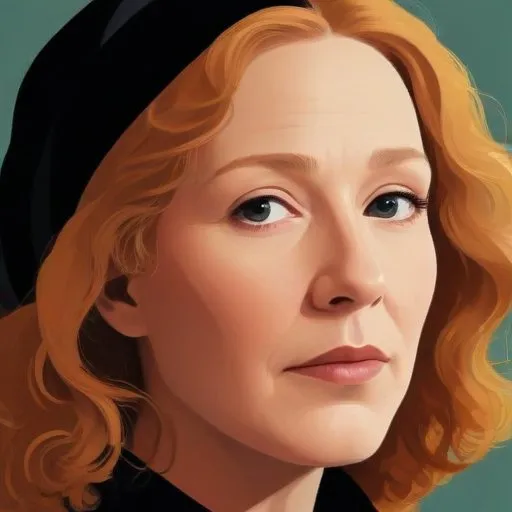
A Pulitzer Prize-winning composer and educator, known for blending folk, rock, and classical music to create a unique sound that explores the human experience.
Julia Wolfe, a renowned American composer and professor of music at New York University, has made a profound impact on the classical music scene with her unique blend of minimalism and rock-inspired compositions. Her most notable work, Anthracite Fields, an oratorio for chorus and instruments, earned her the prestigious 2015 Pulitzer Prize for Music.
Born on December 18, 1958, in Philadelphia, Wolfe grew up with a twin brother and an older brother. She developed an interest in music early on, learning piano as a teenager. However, it wasn't until she took a musicianship class at the University of Michigan that she began to study music seriously.
Wolfe graduated from the University of Michigan in 1982 with a BA in music and theater, as a member of Phi Beta Kappa. Her early twenties saw her writing music for an all-female theatre troupe, before she met composition students Michael Gordon and David Lang, who encouraged her to apply to the Yale School of Music.
In 1984, Wolfe attended Yale, studying primarily with Martin Bresnick. The same year, she married Michael Gordon, and together they founded Bang on a Can, a new music collective, in 1987, along with David Lang. Bang on a Can has since evolved into a thriving organization with a concert series, tours, and a summer festival for emerging composers and performers.
In 1993, Wolfe, Gordon, and Lang founded Red Poppy Music, a printed music publishing company. This was followed by the establishment of Cantaloupe Music, a record label, in 2001.
Wolfe's contributions to music have been recognized with numerous awards and honors. These include:
Since 2009, Wolfe has been a professor of music composition at New York University's Steinhardt School. Prior to this, she was an adjunct professor at the Manhattan School of Music for seven years.
Wolfe's impact on classical music is undeniable, and her legacy continues to inspire a new generation of composers and musicians. Her unique blend of styles and her commitment to pushing the boundaries of classical music have cemented her place as a leading figure in the industry.
Wolfe's music is deeply rooted in her passion for storytelling and her desire to connect with audiences on a deeper level. She draws inspiration from a wide range of sources, including literature, history, and personal experiences.
As Wolfe once said, "Music is a way to tap into the emotional core of who we are, to express the inexpressible, and to connect with others in a way that transcends language."
This philosophy is reflected in her work, which continues to captivate audiences and inspire new generations of musicians and composers.
79 Years Old
A Pulitzer Prize-winning composer, known for blending minimalism with complex rhythms, creating a unique sound that resonates with audiences worldwide.
89 Years Old
A pioneer of minimalism, creating hypnotic, repetitive patterns that redefine classical music, influencing generations of musicians and composers.
89 Years Old
A pioneer of minimalist music, creating hypnotic, repetitive patterns that revolutionized classical music and influenced film scores and popular culture.
74 Years Old
A renowned cancer researcher and professor who made significant contributions to the understanding and treatment of cancer, particularly in the field of p53 tumor suppressor gene.
Born in 1909
Pioneering stage and screen director known for his work on Broadway and in film, particularly in the 1940s and 1950s, with a focus on drama and social commentary.
Born in 1908
A pioneering composer of modern classical music, known for his complex and innovative works that pushed the boundaries of harmony and rhythm.
96 Years Old
A pioneer of avant-garde music, this composer and educator is renowned for his innovative and theatrical works that often feature unconventional instruments and techniques.
63 Years Old
Pulitzer Prize-winning composer known for blending traditional and contemporary styles, creating vibrant, evocative music for orchestras and chamber ensembles.
