


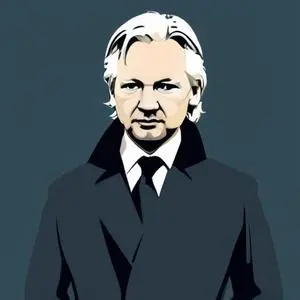
A controversial figure who publishes classified documents and information online, exposing government secrets and sparking global debates.
Julian Assange, the enigmatic founder of WikiLeaks, is known for publishing classified information and revealing secrets that governments and corporations would rather keep hidden. Through his online whistleblowing platform, Assange has exposed corruption, deceit, and human rights abuses on a global scale, making him both a hero and a villain in the eyes of the public.
In 2006, Assange, an Australian journalist and activist, launched WikiLeaks, a website dedicated to publishing classified documents and information leaked by anonymous sources. The platform quickly gained international attention, and by 2010, WikiLeaks had grown into a global phenomenon, with Assange at its helm.
WikiLeaks' most notable leaks include the 2010 publication of the Afghan War Diary, which revealed over 75,000 secret documents about the war in Afghanistan. This was followed by the Iraq War Logs, which exposed the brutality of the conflict and the civilian toll. The Cablegate scandal in 2010, which published confidential U.S. diplomatic cables, was another major exposé that shook the foundations of international diplomacy.
Assange's work has been recognized with numerous awards, including the 2008 Economist Index on Censorship Award, the 2010 Amnesty International UK Media Award, and the 2011 Sydney Peace Foundation Gold Medal.
Assange's crusade for transparency and accountability has led him to challenge government secrecy and corporate malfeasance. He has worked with major media outlets, such as The Guardian and The New York Times, to publish explosive revelations about corporate corruption, political scandals, and human rights abuses.
In 2010, Assange was arrested in London and held without bail, facing extradition to Sweden on allegations of sexual assault. He eventually sought asylum in the Ecuadorian Embassy in London, where he remained for seven years, until his asylum was revoked in 2019. Assange was subsequently arrested and charged with breaching the UK Bail Act and conspiracy to commit computer intrusion related to the leaks provided by Chelsea Manning.
Assange's beliefs center around the idea that transparency and accountability are essential for a just and democratic society. He advocates for the free flow of information, criticizing government secrecy and corporate control over the media. Assange's philosophy has influenced a generation of activists, journalists, and whistleblowers, inspiring them to challenge power structures and defend human rights.
Assange's work has had a profound impact on modern society, forcing governments to re-examine their secrecy policies and corporations to confront their accountability. His actions have sparked a global debate about the role of whistleblowers, the limits of government power, and the importance of a free press.
Julian Assange's work has left an indelible mark on history, inspiring a new generation of activists and journalists to continue his fight for transparency and accountability. Despite facing political persecution, Assange remains a beacon of hope for those seeking truth and justice in a world where power often seeks to hide its secrets.
