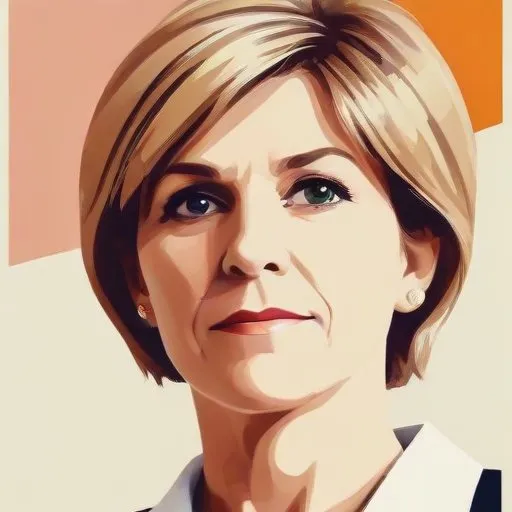
Julie Bishop

Julie Bishop

Julie Bishop was born on July 17th, 1956

Full Name: Julie Isabel Bishop
Place of Birth: Lobethal, South Australia, Australia
Profession: Lawyer, Politician
Office: Minister for Foreign Affairs
Term: 2013-2018
Party: Liberal Party of Australia
Education: University of Adelaide
Notable Work: Australian Foreign Policy

Australia's first female Minister for Foreign Affairs, serving from 2013 to 2018, known for her diplomatic efforts and advocacy for women's empowerment.

Written by: Emma Thompson Emma Thompson

Julie Bishop: Australia's First Female Foreign Minister

Julie Bishop is a name synonymous with Australian politics, particularly in the realm of foreign affairs. As the country's first female Foreign Minister, Bishop made history in 2013, taking the reins of a portfolio that would test her diplomatic mettle in the face of global challenges.

A Career in Politics

Born on July 17, 1956, in Lobethal, South Australia, Bishop's foray into politics began with her election to the Australian Parliament in 1998 as the Member for Curtin. Prior to her political career, she worked as a commercial lawyer in Perth, Western Australia, and served as a delegate to the 1998 Constitutional Convention.

Her early years in politics saw her hold various ministerial positions, including Minister for Ageing (2003-2006), Minister for Education and Science (2006-2007), and Minister for Women (2006-2007). In 2007, she made history by becoming the first woman to be elected Deputy Leader of the Liberal Party, a position she would hold for over a decade.

Australia's First Female Foreign Minister

In 2013, Bishop's career reached new heights when she was appointed Minister for Foreign Affairs by Prime Minister Tony Abbott. This milestone marked a significant moment in Australian political history, as Bishop became the country's first female Foreign Minister.

During her tenure, Bishop navigated complex global issues, including the international military intervention against ISIL, the shooting down of Malaysia Airlines Flight 17, and the execution of Australian citizens by Indonesia. She also oversaw significant changes to the Australian foreign aid program.

Personal Milestones and Key Life Events

In addition to her political accomplishments, Bishop has achieved several personal milestones. In 2020, she became the Chancellor of the Australian National University, a role that reflects her commitment to education and public service.

Bishop's dedication to her country is matched only by her passion for fashion. An avid follower of Australian design, she has been known to wear bespoke ensembles on the global stage, showcasing the country's fashion talent.

Influence on Modern Society

Bishop's legacy extends beyond the realm of politics. As a trailblazer for women in leadership positions, she has inspired a generation of Australian women to pursue careers in politics and public service.

Career Highlights and Major Works

Bishop's foreign policy achievements are a testament to her skill and dedication. Some of her notable accomplishments include:

Philosophical Contributions and Beliefs

Throughout her career, Bishop has been guided by a strong sense of public service and a commitment to promoting Australia's interests on the global stage.

In her own words, "As Foreign Minister, my job is to promote Australia's interests, to protect our citizens, and to work with others to address the global challenges that affect us all."

Legacy and Impact

Julie Bishop's legacy is one of trailblazing achievement, inspiration, and dedication to public service. As Australia's first female Foreign Minister, she has left an indelible mark on the country's political landscape.

Her contributions to international diplomacy, gender equality, and women's empowerment will continue to inspire future generations of leaders, both in Australia and around the world.

Trivia and Fun Facts

Did you know that Julie Bishop is a self-confessed "fashion enthusiast"? She has been known to wear bespoke outfits on the global stage, showcasing Australian design talent.

In her spare time, Bishop enjoys reading and practicing yoga. She is also an avid traveler, having visited over 100 countries during her time as Foreign Minister.

Timeline
1956
Born in Lobethal, South Australia
Julie Bishop was born on July 17, 1956, in Lobethal, South Australia. She would later become a prominent Australian politician.
1985
Admitted as a lawyer
Bishop was admitted as a lawyer in 1985 and began her career in law.
1998
Elected to the Australian House of Representatives
Bishop was elected to the Australian House of Representatives as the Member for Curtin.
2013
Became Minister for Foreign Affairs
Bishop became the Minister for Foreign Affairs, the first woman to hold the position in Australia.
2018
Resigned as Minister for Foreign Affairs
Bishop resigned as Minister for Foreign Affairs and returned to the backbench.
Julie Bishop

Julie Bishop Quiz

What was Julie Bishop's notable achievement in Australian politics?

Score: 0/5
FAQ
What is Julie Bishops background in politics?
Julie Bishop is an Australian lawyer and politician who served as the 38th Australian Minister for Foreign Affairs from 2013 to 2018. She was also the Deputy Leader of the Liberal Party of Australia.
What were Julie Bishops key policies as Foreign Minister?
As Foreign Minister, Julie Bishop focused on promoting Australian trade and commerce, strengthening relationships with key partners in the Asia-Pacific region, and addressing global security challenges. She was a strong advocate for womens empowerment and gender equality.
How did Julie Bishop respond to international crises?
Julie Bishop played a key role in responding to several international crises, including the downing of Malaysia Airlines Flight 17 and the Syrian Civil War. She worked closely with international partners to coordinate responses and promote diplomatic solutions.
What is Julie Bishops legacy in Australian politics?
Julie Bishops legacy in Australian politics is marked by her commitment to promoting Australian interests abroad and advancing the cause of gender equality. She is widely respected as a skilled and effective diplomat and politician.
Is Julie Bishop still active in politics?
Julie Bishop is no longer a member of the Australian Parliament, having retired from politics in 2019. However, she remains active in the public sphere, speaking and writing on foreign policy and international relations.

Related People:

Tony Abbott

68 Years Old

The 28th Prime Minister of Australia, a conservative leader who served from 2013 to 2015, known for his tough stance on immigration and climate change skepticism. He's also a Rhodes Scholar and athlete.

Malcolm Turnbull

71 Years Old

Australian journalist and politician who served as the 29th Prime Minister of Australia, known for his leadership during a tumultuous period in Australian politics and his advocacy for progressive policies.

Scott Morrison

58 Years Old

The 30th Prime Minister of Australia, serving from 2018 to 2022, known for his conservative policies and leadership during the COVID-19 pandemic. He's also remembered for his role in shaping Australia's climate change response.

Kevin Rudd

68 Years Old

The 26th Prime Minister of Australia, a diplomat, and leader who apologized to the Indigenous Australians for past injustices and played a key role in shaping the country's climate change policies.

Julia Gillard

64 Years Old

The first female Prime Minister of Australia, serving from 2010 to 2013, known for her progressive policies and leadership during a period of significant economic reform.

Bill Shorten

59 Years Old

Australian Labor Party leader who served as Opposition Leader from 2013 to 2019, known for his advocacy on issues like climate change and economic inequality.

Tanya Plibersek

56 Years Old

Australian Minister of Health who oversaw significant healthcare reforms and advocated for women's rights, particularly in reproductive health.

Alexander Downer

74 Years Old

The 34th Minister of Foreign Affairs for Australia, serving from 1996 to 2007, is known for his diplomatic efforts and involvement in international relations, particularly in the Asia-Pacific region. He played a key role in shaping Australia's foreign policy during his tenure.