


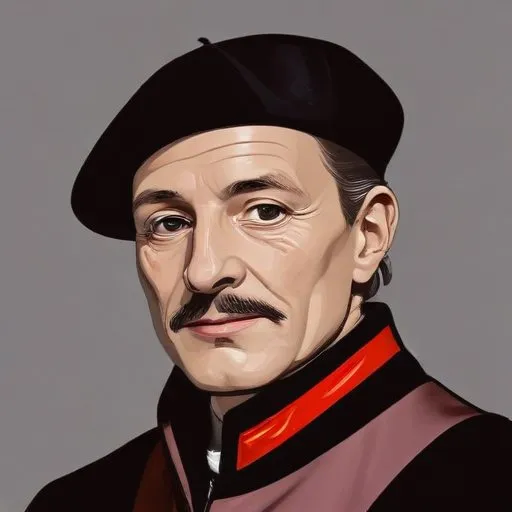
A prominent Romantic painter, known for his vivid and emotive depictions of biblical scenes and landscapes. His works often featured dramatic lighting and intense colors, evoking a sense of spirituality and mysticism.
Julius Schnorr von Carolsfeld, a German painter par excellence, is renowned for his profound contributions to the realm of Biblical art. His masterpiece, the Picture Bible, a sprawling work of art that brings to life the sacred tales of Christianity, remains an iconic testament to his artistic prowess.
Born on March 26, 1794, in Leipzig, Germany, Schnorr von Carolsfeld was immersed in the world of art from a tender age. His father, Veit Hanns Schnorr von Carolsfeld, a skilled draughtsman, engraver, and painter, instilled in him a deep appreciation for the arts. Under his father's guidance, Schnorr von Carolsfeld's earliest known works were meticulous copies of John Flaxman's Neoclassical drawings.
In 1811, Schnorr von Carolsfeld enrolled in the Vienna Academy, where he studied under the tutelage of Friedrich Heinrich Füger. It was here that he befriended fellow artists Joseph Anton Koch and Heinrich Olivier, whose influences would shape his distinctive style. His association with the Nazarene movement, a revolutionary art movement that sought to revive the principles of earlier periods, had a profound impact on his artistic trajectory.
In 1815, Schnorr von Carolsfeld joined the Nazarene movement in Rome, where he became enamored with the art of the Renaissance. His early works during this period, characterized by refined simplicity, were heavily influenced by the likes of Fra Angelico. However, he soon shifted his focus towards more elaborate High Renaissance models, which would become a hallmark of his style.
Schnorr von Carolsfeld's magnum opus, the Picture Bible, is an exhaustive collection of biblical scenes that showcases his mastery of color, composition, and narrative storytelling. This monumental work, consisting of over 240 illustrations, remains an unparalleled achievement in the realm of religious art. In addition to the Picture Bible, Schnorr von Carolsfeld also designed stunning stained glass windows for cathedrals, further solidifying his reputation as a master artist.
Schnorr von Carolsfeld's contributions to the world of art are multifaceted and far-reaching. His work not only elevated the status of religious art but also inspired a new generation of artists to explore the intersection of faith and art. Today, his art continues to inspire and awe, serving as a testament to his enduring legacy.
Schnorr von Carolsfeld's personal life was marked by his marriage to Maria Heller, with whom he shared a deep bond. His friendships with fellow artists, including Peter von Cornelius and Johann Friedrich Overbeck, played a significant role in shaping his artistic vision.
Schnorr von Carolsfeld's artistic prowess was recognized during his lifetime, earning him numerous accolades and honors. His work continues to be celebrated and admired, cementing his position as one of the most important artists of his era.
As we reflect on the life and work of Julius Schnorr von Carolsfeld, we are reminded of the profound impact he had on the world of art. His Picture Bible, a masterpiece of biblical proportions, stands as a testament to his boundless creativity and artistic genius. As we continue to marvel at his work, we are inspired to explore the depths of faith, art, and the human experience.
Born in 1774
A 19th-century Romantic painter and etcher, renowned for his mystical and contemplative landscapes that often featured ruins, mountains, and misty skies, evoking a sense of spirituality and connection to nature.
Born in 1789
A German-Italian painter and engraver, known for his Romanticist and Nazarene art movements, creating emotive and detailed works that explored Christian themes and mythology.
Born in 1788
A Romantic-era painter known for his dreamy, mystical, and often melancholic works that explored the relationship between nature and humanity. His unique style blended medieval and Renaissance influences.
