


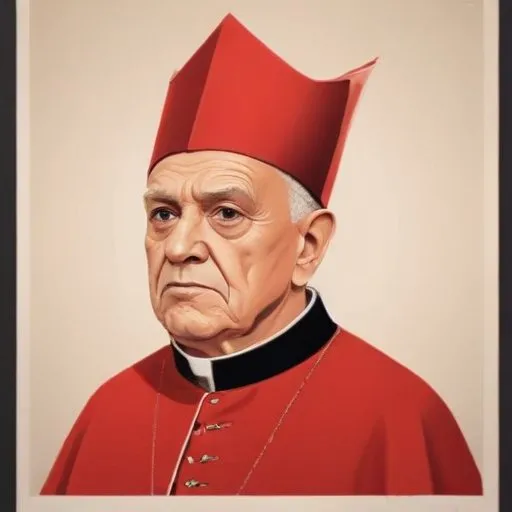
A prominent Catholic Church leader who served as the Archbishop of Warsaw and Gniezno, known for his influential role in Poland's transition from communism to democracy.
Jzef Glemp, a renowned Polish cardinal, is best known for his illustrious career as the Archbishop of Warsaw from 1981 to 2006 and his elevation to the cardinalate in 1983. As the Primate of Poland, he played a pivotal role in shaping the country's Catholic community during a tumultuous period in its history.
Born on December 18, 1929, in Inowrocław, Poland, Jzef Glemp was the son of Kazimierz Glemp and Salomea Komicka. His father's participation in the Greater Poland Uprising from 1918 to 1919 instilled in him a strong sense of patriotism and duty. Glemp's education was interrupted by World War II, during which he and his siblings were forced to work as slave laborers under Nazi occupation.
After the war, Glemp resumed his studies at the seminaries of Gniezno and Poznań, eventually being ordained to the priesthood on May 25, 1956, by Bishop Franciszek Jedwabski.
Between 1956 and 1959, Glemp dedicated himself to the education of incurable youth and children in Międzyrzecz and Witkowo. He also taught religion classes in Włgrowiec, Miasteczko Krajeńskie, and Polska Wieś. His exceptional service earned him a spot at the Pontifical Lateran University in Rome, where he studied canon law and earned his doctorate in utroque iure in 1964.
In 1964, Glemp returned to Gniezno, Poland, where he became chaplain of the Dominican and Franciscan Sisters and teacher of religion in the house for delinquent minors. He went on to hold various positions, including Secretary of the Seminary of Gniezno, notary for the Curia and the metropolitan tribunal, and defender of the bond.
In 1981, Glemp was appointed Archbishop of Warsaw, a position he held for 25 years. Two years later, he was elevated to the cardinalate by Pope John Paul II, becoming the first Polish cardinal since 1946. As Primate of Poland, Glemp played a crucial role in guiding the country's Catholic community during a time of great upheaval.
Throughout his career, Glemp was known for his strong leadership and unwavering commitment to his faith. He worked tirelessly to promote Catholic values and foster greater understanding between the Church and the Polish government.
Jzef Glemp's legacy is a testament to his dedication to the Catholic Church and his country. He played a vital role in Poland's transition from communism to democracy, and his leadership helped to shape the country's religious landscape.
Today, Glemp is remembered as a pillar of the Catholic Church in Poland, a champion of faith, and a symbol of hope for generations to come.
Jzef Glemp's remarkable life and legacy serve as a testament to the power of faith and dedication. His unwavering commitment to the Catholic Church and his country continues to inspire generations of Catholics around the world.
Born in 1920
Leader of the Catholic Church from 1978 to 2005, known for helping to end communism in Poland and being a charismatic advocate for human rights and social justice.
