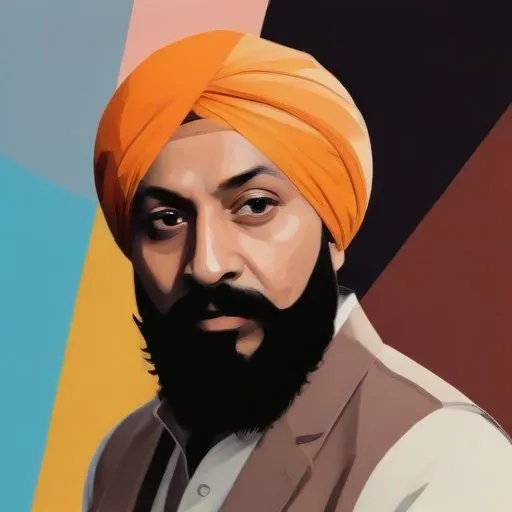
K. Bikram Singh: The Visionary Filmmaker and Indian Politician
A Legacy of Storytelling and Artistic Expression
K. Bikram Singh, an Indian politician, and filmmaker, is most renowned for his thought-provoking documentary film,
Satyajit Ray Introspections (1991), and feature film,
Tarpan (1994). Through his work, Singh showcased his remarkable storytelling skills, weaving together narratives that not only captivated audiences but also left a lasting impact on the cinematic world.
Early Life and Education
Born on May 26, 1938, Singh pursued his academic interests in Political Science and History, earning his Master's degrees from the University of Delhi in 1958 and 1960, respectively. This academic foundation laid the groundwork for his future endeavors in politics and filmmaking.
A Distinguished Career
Singh's professional journey began as a lecturer in history, followed by his entry into the Indian Railway Traffic Service in 1962. During his 21-year tenure, he held various notable positions, including Joint Director of Food Corporation of India, Joint Director Planning Railway Board, and Joint Director of Film Festivals. In 1983, he took voluntary retirement from government service to focus on his true passion – filmmaking.
Filmmaking and Documentaries
Singh's directorial debut,
Tarpan, starring Om Puri, Revathy, and Manohar Singh, premiered at several international film festivals, including Moscow International Film Festival, Montreal World Film Festival, Chicago International Film Festival, and Cairo International Film Festival. In addition to his feature films, Singh produced over 60 documentaries for film and television, many of which explored the lives and works of Indian artists.
Literary Contributions
In 2008, Singh published his landmark book,
MAQBOOL FIDA HUSAIN, a definitive account of the artist's work from 1947 to 2007. This literary masterpiece received critical acclaim from art connoisseurs, critics, and the artist himself, M.F. Husain.
Impact and Legacy
K. Bikram Singh's legacy extends beyond his own creations. He inspired a new generation of Indian filmmakers, artists, and writers to explore the intersection of art, politics, and society. Through his work, Singh bridged the gap between different mediums, showcasing the power of storytelling to educate, inspire, and reform.
- Singh's films and documentaries have been screened at numerous international festivals, promoting Indian cinema and art globally.
- His literary contributions have enriched the understanding of Indian art and culture.
- Singh's legacy continues to inspire new generations of artists, filmmakers, and writers.
Personal Milestones
Throughout his life, Singh navigated multiple roles, from politician to filmmaker, lecturer, and writer. His remarkable journey serves as a testament to the power of creative expression and the human spirit.
K. Bikram Singh's remarkable life's work has left an indelible mark on Indian cinema, art, and politics. His legacy continues to inspire, educate, and captivate audiences, ensuring that his vision and artistic expression endure for generations to come.
FAQ
What is K. Bikram Singhs most notable film?
Singh is best known for his film Paez, which won the National Film Award for Best Feature Film in 1993. This film showcased his unique storytelling style and ability to capture the essence of Indian culture.
What are K. Bikram Singhs contributions to Indian cinema?
Singh has made significant contributions to Indian cinema, producing and directing films that explore themes of social justice, womens empowerment, and rural development. His works have been recognized nationally and internationally.
What awards has K. Bikram Singh won for his filmmaking?
Singh has received numerous awards, including the National Film Award for Best Feature Film, the Filmfare Award for Best Director, and the Padma Shri, one of Indias highest civilian honors.
What is K. Bikram Singhs approach to filmmaking?
Singhs filmmaking style is characterized by its sensitivity, realism, and attention to detail. He often explores complex social issues, using nuanced storytelling and powerful performances to convey his message.
What legacy has K. Bikram Singh left in the Indian film industry?
Singhs contributions to Indian cinema have inspired generations of filmmakers, actors, and writers. His commitment to social justice and his unique storytelling style have made him a respected figure in the industry.