


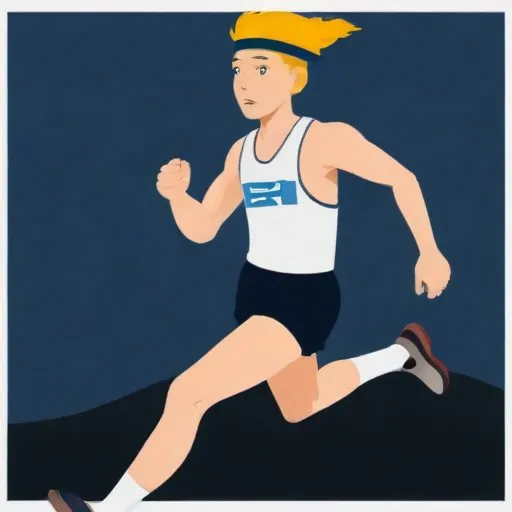
A Finnish middle- and long-distance runner who won silver and bronze medals at the 1980 Summer Olympics, setting multiple national records in the process.
Kaarlo Hannes Maaninka is a Finnish former long-distance runner who etched his name in the annals of Olympic history by securing a silver medal in the 10,000 meters and a bronze medal in the 5,000 meters at the 1980 Moscow Olympics. This phenomenal feat cemented his reputation as one of the most talented distance runners of his generation.
Maaninka's impressive athletic career was marked by numerous records and accolades. He held Finnish national records in the 1,500 meters, 3,000 meters, 5,000 meters, and 10,000 meters events. Notably, he set a personal best of 13:22.00 in the 5,000 meters and 27:44.28 in the 10,000 meters, both achieved in 1980. His marathon personal best was 2:19:28, set in 1978.
However, Maaninka's illustrious career was marred by controversy when he admitted to using blood transfusions during the 1980 Olympics. Although this practice was not prohibited at the time, it sparked intense debate about the ethics of blood doping in sports. Maaninka's admission led to a re-examination of his achievements, with many questioning the legitimacy of his Olympic medals.
In the years following his Olympic success, Maaninka has been open about the pressures and demands of professional sports. He has spoken about the physical and mental toll of intense training, as well as the moral dilemmas athletes face in the pursuit of excellence. These introspective views offer a nuanced perspective on the world of elite athletics.
Despite the controversy surrounding his Olympic medals, Maaninka's achievements have inspired generations of Finnish athletes. His legacy extends beyond his personal accomplishments, as he has contributed to the development of distance running in Finland. His story serves as a cautionary tale about the risks and consequences of blood doping, leading to increased scrutiny and regulation in the sport.
Born on December 25, 1953, Maaninka's early life was marked by a passion for running. He rose through the ranks of Finnish athletics, eventually representing his country on the global stage. Maaninka's post-athletic career has been characterized by a commitment to promoting clean sports and encouraging young athletes to prioritize integrity over achievement.
Maaninka's story has been referenced in various forms of media, including films and documentaries exploring the complexities of sports doping. His career has been compared to that of other athletes who have faced similar controversies, such as East German athletes who received state-sponsored doping programs. These parallels highlight the recurring themes of sportsmanship, ethics, and the human cost of high-level competition.
Kaarlo Maaninka's remarkable career, though tainted by controversy, continues to inspire and educate athletes, coaches, and fans around the world. His remarkable achievements, coupled with his introspective views on the darker aspects of elite sports, make him an important figure in the history of distance running.
76 Years Old
A Finnish runner and police officer who won four Olympic gold medals in the 1970s, setting multiple world records in the 5,000 and 10,000 meters. He's a national hero in Finland for his athletic achievements.
78 Years Old
A Finnish middle- and long-distance runner who won gold in the 1972 Munich Olympics, setting a new world record in the 1500 meters. He's a celebrated athlete in Finland's sports history.
75 Years Old
A Finnish middle- and long-distance runner who won several national championships and represented Finland in international competitions. He set multiple national records in the 1960s and 1970s.
Born in 1889
A Finnish-American distance runner who won four Olympic gold medals and set multiple world records in the 1910s and 1920s, revolutionizing long-distance running techniques.
