


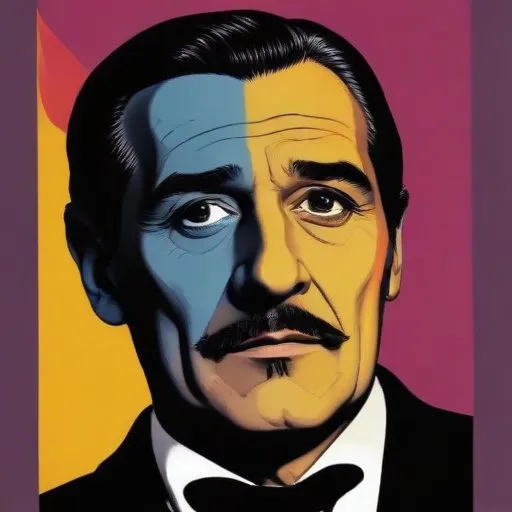
A Czech Renaissance man who excelled in acting, directing, and composing, leaving a lasting legacy in his country's cultural scene. He's most known for his iconic film roles and musical compositions.
Karel Haler was a multifaceted Czech artist, renowned for his work as a songwriter, actor, lyricist, film and theatre director, composer, writer, dramatist, screenwriter, and cabaretier. Born on October 31, 1879, in Prague, Haler's creative scope was vast, and his contributions to the world of entertainment are still celebrated today.
Haler's early life took an unexpected turn when he abandoned his studies to become a glovemaker and instead pursued a career in theatre. He began performing with amateur theatre ensembles, and in 1897, made his debut at the Arna Theatre. This marked the beginning of his journey in the world of entertainment.
Haler's talent and charisma soon led him to join various travelling theatre companies. In 1902, he became a member of the Slovenian theatre in Ljubljana, but eventually returned to Prague, where he joined the National Theatre ensemble. It was during this time that he began to assert himself in conversational plays and explore his singing abilities.
Around 1908, Haler started composing his own music and ventured into the world of cabaret. He went on to become a director and head of various Prague cabarets, including Lucerna (1910-1915, 1918-1923), Rokoko (1915-1918), and Karln Variety Theatre (1924-1929).
During World War I, Haler expanded his creative horizon by entering the world of silent films. He not only acted in but also directed and wrote scripts for films like "České hrady a zámky" (Czech Castles) in 1914. This marked the beginning of his successful film career, which continued well into the era of sound films in the 1930s.
Haler's film career was punctuated by notable roles in films like "Batalion" (The Battalion) in 1927, where he played the role of lawyer and deputy Uher, and "Varhany u svatého Víta" (Organist at St. Vitus Cathedral) in 1929, where he played the role of an organist.
The advent of sound films in the 1930s allowed Haler to showcase his singing skills. In his first sound film role, "Pěsník" (Balladeer) in 1932, he sang patriotic songs like "Svoboda" (Freedom) and "Ta nástup mládí" (That's the Spirit of Youth).
Karel Haler's life was tragically cut short when he was murdered in the Mauthausen concentration camp on December 22, 1941. Despite his untimely death, Haler's contributions to the world of entertainment continue to inspire generations of artists and audiences alike.
Haler's legacy serves as a testament to the power of creativity and the importance of pursuing one's passion. His multifaceted talent and dedication to his craft have left an indelible mark on the world of entertainment.
Born in 1910
A Czech master of fantasy and adventure films, known for combining live-action and animation techniques to create imaginative and visually stunning movies.
