


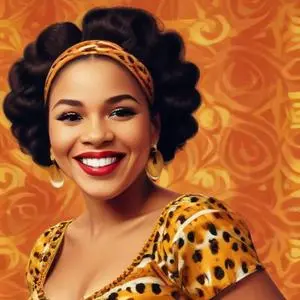
A pioneering dancer and choreographer who blended African, Caribbean, and modern dance styles, creating a unique fusion that helped to popularize African American cultural heritage.
Katherine Mary Dunham was born on June 22, 1909, in a Chicago hospital to a family of mixed ancestry. Her father, Albert Millard Dunham, was a descendant of slaves from West Africa and Madagascar, while her mother, Fanny June Dunham, had Indian, French Canadian, English, and African ancestry. After her mother's death when Dunham was just four years old, her father left her and her older brother, Albert Jr., in the care of relatives.
Dunham's passion for dance began at an early age, and she went on to study anthropology at the University of Chicago, where she also performed as a dancer and ran a dance school. Her academic pursuits took her to the Caribbean, where she studied the African diaspora, ethnography, and local dance, earning a postgraduate academic fellowship.
Dunham's extensive research and training led to the development of the Dunham Technique, a method of movement that combined elements of modern dance, ballet, and African and Caribbean dance traditions. This innovative approach to dance not only showcased her artistic genius but also helped to promote cross-cultural understanding and appreciation.
Dunham's contributions to the world of dance were recognized with numerous awards and honors, including the National Medal of Arts, the Albert Schweitzer Music Award, and the Haitian Legion of Honor. She was also inducted into the Black Filmmakers Hall of Fame and the Dance Hall of Fame.
Dunham's work was deeply rooted in her philosophical beliefs about the power of dance to promote social change and cultural understanding. She believed that dance could be a powerful tool for breaking down racial and cultural barriers, and her work continue to inspire generations of dancers and artists.
Dunham's legacy extends far beyond the world of dance. She was a pioneering figure in the Civil Rights Movement, using her platform to advocate for social justice and racial equality. Her work continues to inspire artists, activists, and scholars today, serving as a testament to the transformative power of art and culture.
Dunham's influence can be seen in the work of numerous artists, including Alvin Ailey, who was heavily influenced by her work. Her legacy continues to inspire new generations of dancers, choreographers, and artists.
Katherine Dunham's remarkable life and career serve as a testament to the power of art and culture to transform society. Her groundbreaking work in dance and anthropology continues to inspire and educate, offering a powerful reminder of the importance of preserving and promoting cultural heritage.
95 Years Old
Founded the first African American dance company, showcasing African American culture and experiences through modern dance, and providing opportunities for minority dancers. Known for powerful, emotional performances that promote unity and social justice.
Born in 1894
Pioneering modern dance techniques and emotional expression through movement, this iconic figure revolutionized the art form with avant-garde works that continue to inspire generations of dancers and artists.
Born in 1879
Pioneering modern dance innovator and educator, credited with introducing Eastern dance forms to the West, and founding the Denishawn School of Dancing.
Born in 1895
Pioneering modern dancer and choreographer who developed a unique movement style emphasizing emotional expression and collaboration, creating influential works that continue to inspire contemporary dance.
