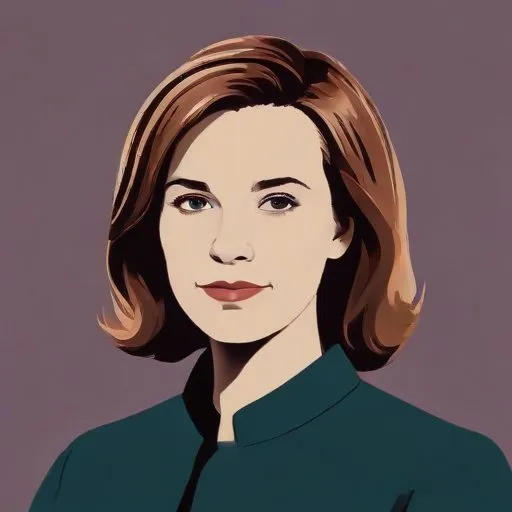
Katherine Freese: Unveiling the Mysteries of Dark Matter and Dark Energy
A Theoretical Astrophysicist at the Forefront of Cosmological Research
Katherine Freese is a renowned theoretical astrophysicist celebrated for her groundbreaking contributions to our understanding of dark matter and dark energy, two of the most enigmatic components of the universe. Her pioneering work has opened new avenues for research, shedding light on the intricate dance of particles and forces that shape the cosmos.
Early Life and Education
Born on February 8, 1957, Freese's fascination with physics began at a young age. She pursued her passion at Princeton University, becoming one of the first women to major in physics at the esteemed institution. She then earned her Master's degree from Columbia University and her Ph.D. from the University of Chicago under the guidance of David Schramm.
Academic Career and Milestones
Freese's academic journey has taken her to some of the most prestigious institutions in the world. After completing her postdoctoral fellowships at Harvard University, the Kavli Institute for Theoretical Physics at the University of California, Santa Barbara, and the University of California, Berkeley, she became an assistant professor at MIT. Her subsequent appointments include the George E. Uhlenbeck Professor of Physics at the University of Michigan in Ann Arbor and the director of Nordita, the Nordic Institute for Theoretical Physics, in Stockholm.
Contributions to Dark Matter and Dark Energy Research
Freese's most significant contributions lie in her work on dark matter and dark energy. She was one of the first to propose methods for detecting dark matter, including the idea of indirect detection in the Earth, which is currently being pursued by the IceCube Neutrino Observatory experiment. Her research, in collaboration with David Spergel, has also explored the possibility of detecting dark matter particles as the Earth orbits the Milky Way. This work has led to a deeper understanding of dark matter, ultimately ruling out MACHOs (Massive Compact Halo Objects) in favor of WIMPs (Weakly Interacting Massive Particles).
Career Highlights and Honors
- Jeff and Gail Kodosky Endowed Chair in Physics at the University of Texas at Austin
- Former director of Nordita, the Nordic Institute for Theoretical Physics, in Stockholm
- Former associate director of the Michigan Center for Theoretical Physics
- Visiting professor of physics at Stockholm University
Influence on Modern Cosmology
Freese's work has significantly advanced our understanding of the universe, pushing the boundaries of modern cosmology. Her research has inspired new generations of scientists, paving the way for further exploration of the mysteries of dark matter and dark energy.
Personal Quotes and Philosophy
"I think it's wonderful that we can use our imaginations to try to understand the universe... It's a very exciting time to be in physics right now." – Katherine Freese
Freese's passion for physics and her dedication to unraveling the secrets of the universe embody the spirit of scientific inquiry and discovery.
Legacy and Impact
Katherine Freese's contributions to the field of astrophysics have cemented her position as a leading figure in the scientific community. Her work will continue to inspire and influence future generations of researchers, shaping our understanding of the cosmos for years to come.
FAQ
What is Katherine Freeses field of research?
Katherine Freese is an American astrophysicist and cosmologist, specializing in dark matter and dark energy research.
What is Katherine Freeses educational background?
Katherine Freese earned a Bachelors degree in physics from Princeton University and a Ph.D. in physics from the University of Chicago.
What are Katherine Freeses notable discoveries?
Katherine Freese has made significant contributions to our understanding of dark matter and dark energy, including proposing the dark stars theory.
What is Katherine Freeses work on dark matter?
Katherine Freese has worked on developing new detection methods for dark matter, including axion searches and indirect detection techniques.
What awards has Katherine Freese won?
Katherine Freese has won several awards, including the American Physical Societys Maria Goeppert Mayer Award and the Alfred P. Sloan Jr. Prize.