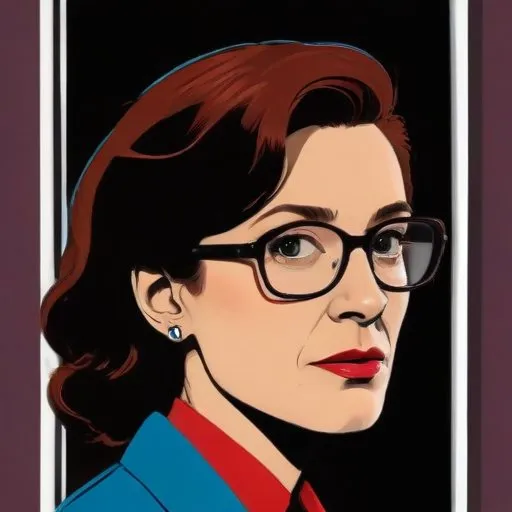
Kathleen Collins: Pioneering Filmmaker and Civil Rights Activist
A Trailblazer in Black Women's Cinema
Kathleen Collins is best known for her groundbreaking work as a filmmaker, playwright, and writer, who paved the way for future generations of Black women in the film industry. Her two feature narratives, "The Cruz Brothers and Miss Malloy" (1980) and "Losing Ground" (1982), expanded the scope of Black women's films and told stories intended for popular consumption.
Early Life and Education
Born on March 18, 1942, in Jersey City, New Jersey, Kathleen Collins was raised in a family that valued education and the arts. Her parents, Loretta and Frank Conwell, encouraged her creativity from an early age. At 15, she won first prize at an annual poetry reading contest at Rutgers Newark College of Arts and Sciences, reciting
Walt Whitman's "A Child Goes Forth" and "I Learned My Lesson Complete."
Collins' academic achievements continued to impress, as she served as assistant editor of her high school's publication, "The Leader," and was a member of the National Honors Society and the Student Council. After graduating from high school in 1959, she attended Skidmore College, where she earned a BA in philosophy and religion in 1963.
Civil Rights Activism
During her college days, Collins became involved in the Civil Rights Movement, inspired by the visit of two leaders from the Student Nonviolent Coordinating Committee (SNCC). She canvassed in Georgia, helping to register Black residents to vote, which led to her arrest.
Filmmaking Career
Collins' filmmaking career was marked by her determination to tell stories that were authentic and meaningful to Black women's experiences. Her feature film "Losing Ground" (1982) was a pioneering work that deliberately sought to create a narrative structure for popular consumption. Although it was denied large-scale exhibition, it paved the way for future generations of Black women filmmakers, including
Julie Dash, who went on to create the first feature-length narrative film by a Black woman to be commercially distributed, "Daughters of the Dust" (1991).
Influence and Legacy
Kathleen Collins' work has had a lasting impact on the film industry, paving the way for more diverse representation and storytelling. Her influence can be seen in the work of contemporary Black women filmmakers, who continue to push the boundaries of narrative storytelling. Collins' legacy extends beyond the film industry, as her commitment to civil rights and social justice continues to inspire future generations of activists and artists.
Awards and Honors
Collins' work was recognized with several awards and honors, including the National Endowment for the Arts Fellowship and the New York State Council on the Arts Fellowship.
Philosophical Contributions
Collins' work was deeply rooted in her philosophical beliefs, which emphasized the importance of humanizing Black experiences and moving beyond racial stereotypes. Her writing and filmmaking sought to capture the complexity and richness of Black life, offering a nuanced and multifaceted portrayal of Black women's experiences.
Personal Milestones
Collins' personal life was marked by her commitment to her art and her community. She continued to write and teach throughout her life, inspiring countless students and artists. Her work remains a testament to her unwavering dedication to social justice and her passion for storytelling.
- Photo credit: National Archives
Trivia and Fun Facts
- Kathleen Collins was also known as Kathleen Conwell, Kathleen Conwell Collins, or Kathleen Collins Prettyman.
- She was influenced by the works of Lorraine Hansberry.
- Collins was a poet, playwright, writer, filmmaker, director, civil rights activist, and educator.
Kathleen Collins' remarkable life and work continue to inspire and influence generations of artists, activists, and filmmakers. Her pioneering spirit, creative vision, and commitment to social justice have left an indelible mark on the film industry and beyond.
FAQ
What is Kathleen Collins most famous film?
Kathleen Collins most famous film is Losing Ground, a 1982 romantic drama that explores the complexities of relationships and identity. It was one of the first films directed by an African American woman to receive widespread recognition.
What themes did Kathleen Collins work often explore?
Kathleen Collins work often explored themes of identity, relationships, and social justice, particularly in the context of the African American experience. Her films and plays often featured strong female protagonists and complex, nuanced characters.
What awards did Kathleen Collins win for her work?
Kathleen Collins won several awards for her work, including the Jury Prize at the 1982 São Paulo International Film Festival for Losing Ground and a National Endowment for the Arts Fellowship in 1985.
How did Kathleen Collins influence other filmmakers?
Kathleen Collins work has influenced many other filmmakers, particularly women of color. Her films and plays have been cited as inspiration by directors such as Ava DuVernay and Dee Rees, and her legacy continues to be celebrated and recognized in the film industry.
What is Kathleen Collins legacy in the film industry?
Kathleen Collins legacy in the film industry is that of a pioneering filmmaker who paved the way for other women of color to tell their stories and bring their perspectives to the screen. Her work continues to be celebrated and recognized today, and she remains an important figure in the history of American cinema.