


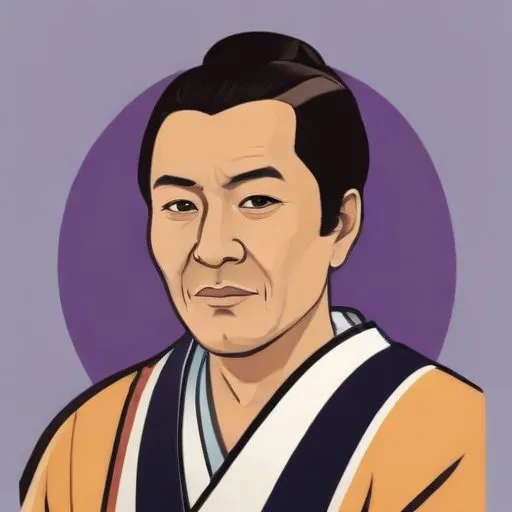
A Japanese statesman who played a key role in the country's modernization during the late 19th century, known for his efforts to abolish feudalism and introduce Western-style reforms.
Katsu Kaishu, born Katsu Yoshikuni, was a Japanese statesman, naval engineer, and military commander who played a pivotal role in shaping the country's modernization and westernization during the late Tokugawa shogunate and early Meiji period. He is best known for his instrumental role in the surrender of Edo to Imperial forces, paving the way for Japan's transformation into a modern nation.
Born on March 12, 1823, in Edo, Katsu Kaishu was the son of a low-ranking retainer of the Tokugawa shogunate. His childhood name was Rintar, and he later adopted the nickname Kaishu from a piece of calligraphy by Sakuma Shozan. As a young man, Katsu studied Dutch and European military science, which laid the foundation for his future expertise in western military technology.
Katsu's knowledge of western military technology earned him the position of translator for the government when European powers attempted to open contact with Japan. He further honed his skills by serving as head naval cadet at the Nagasaki Naval Academy between 1855 and 1859, under the guidance of Dutch naval officers. This experience cemented his reputation as an expert in western military technology.
In 1860, Katsu served as captain of the warship Kanrinmaru, escorting the first Japanese diplomatic mission to the United States. His military career was marked by a series of key appointments, including commissioner of the Tokugawa navy and chief negotiator of the bakufu. However, it was his surrender of Edo to Imperial forces commanded by Saigo Takamori during the Boshin War that cemented his place in Japanese history.
Katsu Kaishu's legacy is multifaceted. He was an advocate of modernization and westernization, playing a crucial role in Japan's transformation from a feudal society to a modern nation. His expertise in western military technology helped bridge the gap between Japan and the West, paving the way for future diplomatic and cultural exchange. His surrender of Edo, though seen as controversial by some, marked a critical turning point in Japan's history, allowing for the Meiji Restoration and the country's subsequent modernization.
Katsu Kaishu's contributions to Japan's modernization have had a lasting impact on the country's development. His advocacy of westernization and modernization paved the way for future generations to adopt new technologies and ideas, transforming Japan into the thriving nation it is today. His legacy serves as a testament to the power of adaptability and forward thinking in shaping a nation's destiny.
As a visionary statesman, Katsu Kaishu's influence extends beyond Japan's borders, inspiring generations to embrace change and strive for progress. His remarkable story serves as a reminder of the importance of adaptability, diplomacy, and vision in shaping the course of history.
