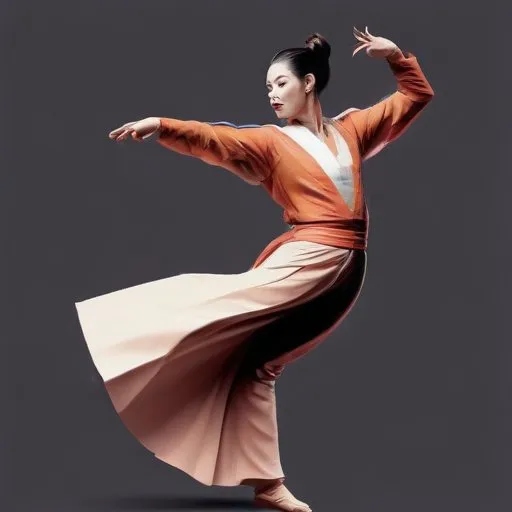
Kazuo Ohno: The Visionary of Butoh Dance
Introduction
Kazuo Ohno was a Japanese dancer, choreographer, and guru who revolutionized the world of contemporary dance with his pioneering work in Butoh, a avant-garde dance form that emerged in post-war Japan. Through his captivating performances, Ohno conveyed the depths of human emotion, exploring the complexities of existence, and transcending the boundaries of conventional dance.
Early Life and Career
Ohno was born on October 27, 1906, in Hakodate City, Hokkaido, Japan. He demonstrated an aptitude for athletics in junior high school and graduated from an athletic college in 1929. Ohno then taught physical education at a Christian high school before studying modern dance with Japanese pioneers Baku Ishii and Takaya Eguchi. This training qualified him to teach dance at the Soshin Girls School in Yokohama, where he worked until his retirement in 1980.
War Experience and Inspiration
Ohno's life took a dramatic turn in 1938 when he was drafted into the Japanese Army as a lieutenant, later rising to the rank of captain. He fought in China and New Guinea, where he was captured and interned by the Australians as a POW. The war and its horrors had a profound impact on Ohno, inspiring some of his later works, such as the poignant "Jellyfish Dance," a meditation on the burials at sea he had observed on board the ship transporting soldiers back to Japan.
Rise to Prominence
After the war, Ohno resumed his dance career, presenting his first solo works in 1949 in Tokyo. In the 1950s, he taught at the Mime Studio with Shinya Ando, where his student, Yoshito Ohno, would later become a renowned Butoh dancer in his own right. It was during this period that Ohno met Tatsumi Hijikata, who inspired him to cultivate Butoh, a new form of dance that rejected Western dance forms and sought to express the darkness and beauty of the human experience.
Butoh and Beyond
Ohno's work in Butoh led to the development of a unique, slow-motion style of dance that emphasized the expression of intense emotions through subtle, nuanced movements. His performances, often characterized by their dreamlike quality, explored themes of love, death, and the human condition. Through his dance, Ohno sought to transcend the mundane and touch the sublime, creating a sense of connection with his audience.
Awards and Recognition
Throughout his career, Ohno received numerous awards and accolades for his contributions to dance. In 1996, he was awarded the Asahi Prize, one of Japan's most prestigious cultural awards. He also received the Order of Culture, Japan's highest cultural honor, in 2002.
Legacy and Impact
Ohno's influence on modern dance is profound and far-reaching. His work has inspired generations of dancers, choreographers, and artists, influencing not only Butoh but also contemporary dance, theater, and performance art. Ohno's legacy extends beyond the world of dance, however, as his life and work serve as a testament to the power of art to transform and transcend human experience.
Quotes and Memorable Sayings
Ohno's wisdom and insight are reflected in his words, which offer a glimpse into the philosophy behind his art:
- "The best thing someone can say to me is that while watching my performance, they began to cry. It is not important to understand what I am doing; perhaps it is better if they don't understand, but just respond to the dance."
- "Dance is not a spectacle, but a way of life."
Personal Life and Relationships
Ohno's personal life was marked by a deep sense of connection with his family and colleagues. His son, Yoshito Ohno, is a renowned Butoh dancer and choreographer who has continued his father's legacy. Ohno's relationship with Tatsumi Hijikata, the founder of Butoh, was particularly influential, as Hijikata's rejection of Western dance forms and emphasis on the expression of raw emotion resonated deeply with Ohno.
Later Life and Passing
Ohno continued to dance and choreograph until his later years, passing away on June 1, 2010, at the age of 103. His life and work serve as a testament to the power of art to transform and transcend human experience, leaving behind a legacy that will continue to inspire generations to come.