


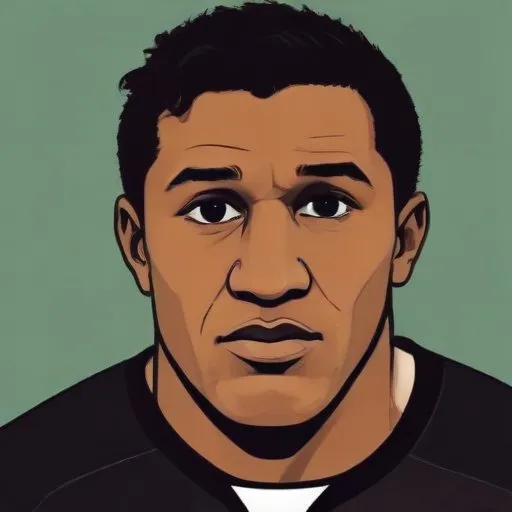
A flanker who played 24 tests for the All Blacks between 1976 and 1983, known for his tough and skilled play.
Ken Gray, a New Zealand rugby union player, is renowned for his exceptional skills on the field and his courageous stand against apartheid off it. With 24 international games under his belt, Gray's decision to refuse touring South Africa in 1970, citing opposition to the country's racist policies, made him a trailblazer in the fight against discrimination.
Born on June 24, 1938, in Porirua, New Zealand, Gray developed a passion for sports from a young age. He attended Plimmerton School and later Wellington College, where he excelled in rugby and showjumping. His talent on the rugby field earned him a spot in the Petone Rugby Club, and before the age of 20, he was selected to play provincial rugby for Wellington.
In 1963, Gray was chosen to play for the All Blacks, New Zealand's national rugby union team. Over the next six years, he played 50 matches for the team, 24 of which were test matches. Gray's impressive skills as a lock and prop forward, as well as his exceptional lineout jumping abilities, made him a valuable asset to the team.
In 1970, the All Blacks were scheduled to tour South Africa, but Gray made the bold decision to refuse participation. Citing his opposition to apartheid, Gray's move was a significant statement against the racist policies of the South African government. At the time, his decision was met with both praise and criticism, but in hindsight, it is clear that Gray's stance was a courageous and visionary act.
Trevor Richards, national chairperson of Halt All Racist Tours (HART), later praised Gray's decision, stating that it was "a generation ahead of its time." Gray's refusal to tour South Africa was a powerful message that resonated with many, and it paved the way for others to take a stand against apartheid.
Ken Gray's legacy extends far beyond his impressive rugby career. His brave stance against apartheid has inspired generations of athletes and individuals to stand up against discrimination and fight for human rights. Gray's decision to prioritize his principles over his career is a testament to his character and a powerful reminder of the importance of using one's platform to effect change.
Ken Gray's story serves as a powerful reminder of the impact that individuals can have when they stand up for what they believe in. His legacy continues to inspire and motivate others to take a stand against discrimination and fight for human rights.
45 Years Old
A dominant and iconic flanker who led the All Blacks to numerous championships, including two World Cup titles, and is widely regarded as one of the greatest rugby players of all time.
44 Years Old
A legendary fly-half who led the All Blacks to numerous victories, including two World Cup titles, and is widely regarded as one of the greatest players in rugby history.
51 Years Old
A dominant and intimidating winger who revolutionized the sport of rugby with his unprecedented speed, power, and try-scoring ability. He's a legendary figure in the rugby world, inspiring a generation of players.
63 Years Old
A dominant hooker who captained the All Blacks to World Cup victory in 1987 and is widely regarded as one of the greatest players in rugby history.
64 Years Old
A renowned production designer and illustrator, best known for his work on Star Trek and other sci-fi franchises, creating iconic sets, props, and spaceships. His art has inspired countless fans and filmmakers.
64 Years Old
A legendary fullback who won the 1991 Rugby World Cup with Australia and is renowned for his exceptional skills, particularly his ability to score tries from anywhere on the field.
61 Years Old
A renowned rugby player and coach who led the New Zealand national team to numerous victories, including the 2015 Rugby World Cup. He's credited with revolutionizing the sport with his innovative coaching style.
