


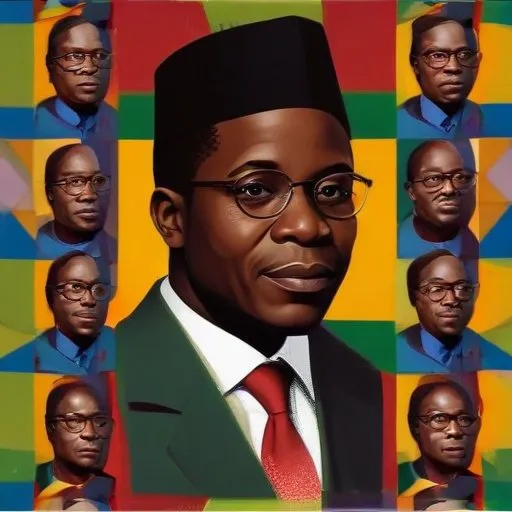
A pioneering figure in African historiography, he rewrote the narrative of African history from an African perspective, challenging Eurocentric views and promoting a more balanced understanding of the continent's past.
Kenneth Onwuka Dike is renowned for being the first Nigerian Vice-Chancellor of the University of Ibadan, a premier institution in Nigeria. He is also celebrated for founding the Ibadan School, a prominent historiographical movement that shaped the writing of Nigerian history until the 1970s.
Born on December 17, 1917, in Awka, eastern Nigeria, Kenneth Dike pursued his academic journey at Fourah Bay College, Sierra Leone, and later at Durham University, where he earned his BSc degree. He furthered his education at the University of Aberdeen, earning an MA, and finally, at King's College London, where he obtained his PhD.
As a member of the University of Ibadan's history department in the 1960s, Dike played a pivotal role in promoting African leadership of scholarly works published on Africa. He was the head of the organizing committee of the First International Congress of Africanists in Ghana in 1963, where he advocated for meticulous, non-colonial focused African research, publication of research in various languages, including indigenous and foreign, and the introduction of native speakers to history.
Dike was the first African professor of history and head of a history department at the University College of Ibadan. He founded the Nigerian National Archives and helped establish the Historical Society of Nigeria. His seminal work, Trade and Politics in the Niger Delta 1830-1885, is considered a watershed in African historiography.
In 1965, Dike was elected chairman of the Association of Commonwealth Universities. He was also the first director of the International School Ibadan. His contributions to education and historiography earned him recognition as one of the most influential Nigerians of his time.
Kenneth Dike's pioneering work in African historiography has inspired generations of African historians. Ebere Nwaubani argues that Dike was the first modern scholarly proponent of Africanist history. His legacy continues to shape the way African history is written, studied, and perceived today.
Kenneth Onwuka Dike's remarkable contributions to education, historiography, and African leadership have left an indelible mark on the academic community. His legacy continues to inspire future generations of scholars and historians.
Born in 1904
First President of Nigeria, leading the country to independence from British colonial rule and shaping its early years as a sovereign nation.
Born in 1909
A Nigerian lawyer and politician who played a key role in the country's independence movement and was a strong advocate for democracy and education. He's also known for his efforts to develop Nigeria's economy and infrastructure.
