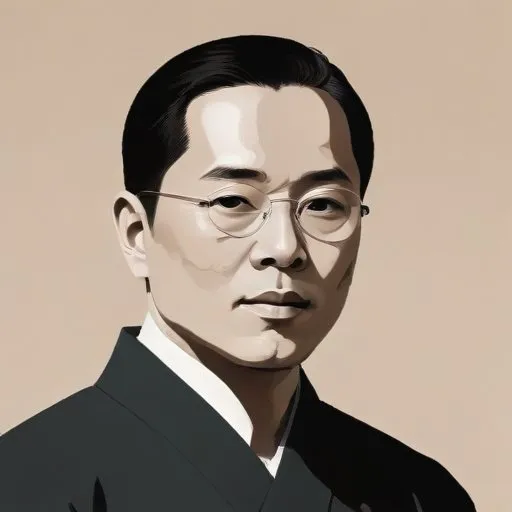
Kim Heungsou: The Picasso of Korea
Revolutionizing Korean Art with Harmonism
Kim Heungsou, a renowned Korean painter, earned the esteemed title of "Picasso of Korea" for his innovative and bold artistic style, which blended Eastern and Western influences. With a career spanning over six decades, Heungsou's work continues to inspire and influence Korean art, leaving a lasting legacy in the art world.
Early Life and Education
Born on November 17, 1919, in Hamheung, Korea, under Japanese rule, Heungsou graduated from Tokyo Art School and later studied painting in Paris. This exposure to European art and culture significantly shaped his artistic perspective and style.
The Genesis of Harmonism
Heungsou's most notable contribution to the art world is the development of "Harmonism," a unique style that combines structures and abstract forms in a single artwork. Inspired by the harmony of yin and yang, as well as the blending of Eastern and Western philosophies, Heungsou's Harmonism paintings reflect the intricacies of human relationships and the balance between opposing forces.
A Global Artistic Presence
Throughout his career, Heungsou's work has been showcased in numerous international exhibitions, including the prestigious Salon d'Automne in Paris. His art has also been featured in auctions around the world, solidifying his position as a prominent figure in the global art scene.
Academic and Professional Achievements
Heungsou's expertise and influence extended beyond his art, as he held various academic and professional positions. He served as a deputy at Seoul Art High School, a lecturer at Seoul National University, and an exchange professor at the Pennsylvania Academy of Fine Arts from 1968 to 1980.
Personal Life and Legacy
Heungsou's personal life was marked by significant events, including the passing of his partner, Jang Soo-hyun, in 2012. Heungsou himself passed away on June 9, 2014, at the age of 94. Despite his passing, his legacy lives on through his remarkable body of work, which continues to inspire and educate art enthusiasts around the world.
Philosophical Contributions and Beliefs
Heungsou's Harmonism philosophy extends beyond the realm of art, promoting a deeper understanding of the interconnectedness of opposing forces and the importance of balance in human relationships. His artistic style and philosophy have had a profound impact on Korean art and culture, shaping the country's modern art landscape.
Trivia and Fun Facts
- Heungsou's work has been exhibited in over 20 countries worldwide.
- The American-Korean Foundation has continuously supported Heungsou's work throughout his career.
- Heungsou's Harmonism paintings are highly sought after by collectors and art enthusiasts, with some pieces selling for thousands of dollars at auction.
Kim Heungsou's remarkable career and contributions to Korean art have cemented his position as one of the country's most revered artists. His innovative Harmonism style continues to inspire and educate, ensuring his legacy will endure for generations to come.
FAQ
What was Kim Heungsous role in Korean art education?
Kim Heungsou was a Korean painter and educator who played a significant role in modernizing Korean art education. He introduced Western-style art education to Korea and established the countrys first art school.
What was Kim Heungsous artistic style?
Kim Heungsous artistic style was characterized by his use of vibrant colors and bold brushstrokes. He was influenced by Western modernism and incorporated elements of Cubism and Fauvism into his work.
Did Kim Heungsou have any notable students or followers?
Yes, Kim Heungsou had several notable students who went on to become prominent Korean artists, including Lee Jung-seob and Park Soo-keun.
What was Kim Heungsous later life and legacy like?
Kim Heungsou continued to paint and teach until his death on June 21, 1957. His legacy as a pioneering figure in Korean modern art has been recognized through various exhibitions and retrospectives.
Is Kim Heungsou remembered as a Korean art pioneer?
Yes, Kim Heungsou is remembered as one of the most important figures in Korean modern art, known for his innovative style and his dedication to promoting art education in Korea.