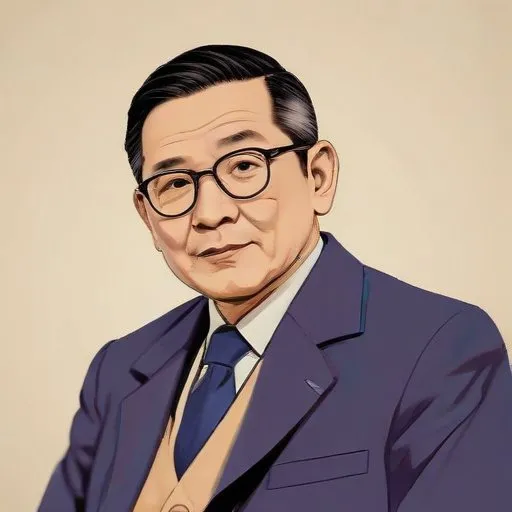
Koichi Tanaka: The Japanese Electrical Engineer Revolutionizing Mass Spectrometry
A Shared Nobel Prize in Chemistry: A Novel Method for Mass Spectrometric Analyses
Koichi Tanaka is a renowned Japanese electrical engineer who, along with John Bennett Fenn and
Kurt Wüthrich, was awarded the Nobel Prize in Chemistry in 2002 for developing a pioneering method for mass spectrometric analyses of biological macromolecules. This groundbreaking method enabled the analysis of large biological molecules, such as proteins, without fragmenting them, thereby opening up new avenues for research in biology, chemistry, and medicine.
Early Life and Education
Born on August 3, 1959, in Toyama, Japan, Tanaka's early life was marked by tragedy, with his biological mother passing away just a month after his birth. Despite these challenging circumstances, Tanaka went on to graduate from Tohoku University with a Bachelor's degree in electrical engineering in 1983. After completing his education, he joined Shimadzu Corporation, where he was engaged in the development of mass spectrometers.
The Discovery of Soft Laser Desorption (SLD)
In February 1985, Tanaka made a crucial discovery that would change the face of mass spectrometry. He found that by using a mixture of ultrafine metal powder in glycerol as a matrix, an analyte could be ionized without losing its structure. This innovation, known as Soft Laser Desorption (SLD), allowed for the analysis of large biological molecules without fragmenting them. Tanaka's work was filed as a patent application in 1985 and was later presented at the Annual Conference of the Mass Spectrometry Society of Japan in May 1987.
Awards and Honors
Tanaka's pioneering work in mass spectrometry has been recognized with several awards and honors, including:
- 2002 Nobel Prize in Chemistry (shared with John Bennett Fenn and Kurt Wüthrich)
- 2002 Japan Academy Prize
- 2001 The Japanese Society for Analytical Chemistry Award
- 1997 The Japanese Biochemical Society Award
Philosophical Contributions and Beliefs
Tanaka's work is guided by a deep understanding of the importance of interdisciplinary research. He believes that the boundaries between biology, chemistry, and physics must be blurred to facilitate innovation and discovery. His pioneering method has enabled researchers to study biological systems at the molecular level, leading to a deeper understanding of the underlying mechanisms and processes.
Impact on Modern Society
The impact of Tanaka's work on modern society has been significant. His method has enabled the development of new diagnostic tools, therapies, and treatments for diseases such as cancer and Alzheimer's. Additionally, his work has paved the way for the discovery of new biomarkers, which can aid in the early detection and prevention of diseases.
Career Highlights and Major Works
Tanaka's career has been marked by several significant milestones, including:
- Developing the Soft Laser Desorption (SLD) method for mass spectrometry
- Receiving the Nobel Prize in Chemistry in 2002
- Authoring numerous publications on mass spectrometry and its applications
Legacy and Impact on the Field
Tanaka's work has had a profound impact on the field of mass spectrometry, enabling researchers to study biological systems at the molecular level. His method has paved the way for the development of new diagnostic tools, therapies, and treatments for diseases. As a pioneer in the field, Tanaka's work continues to inspire and influence researchers around the world.
FAQ
What is Koichi Tanakas contribution to mass spectrometry?
Koichi Tanaka developed the Soft Laser Desorption (SLD) method, which enabled the ionization of large biomolecules, revolutionizing the field of mass spectrometry.
What is the significance of Koichi Tanakas Nobel Prize?
Koichi Tanaka was awarded the Nobel Prize in Chemistry in 2002 for his pioneering work on mass spectrometry, recognizing the impact of his research on fields like proteomics and genomics.
How did Koichi Tanakas work impact medical research?
Koichi Tanakas development of soft ionization techniques has enabled the analysis of complex biological molecules, leading to breakthroughs in disease diagnosis and treatment.
What is Koichi Tanakas current research focus?
Koichi Tanaka continues to work on advancing mass spectrometry techniques, exploring applications in areas like personalized medicine and biomarker discovery.
What is Koichi Tanakas legacy in the scientific community?
Koichi Tanaka is widely respected as a pioneer in mass spectrometry, and his work has inspired generations of scientists to pursue research in this critical field.