


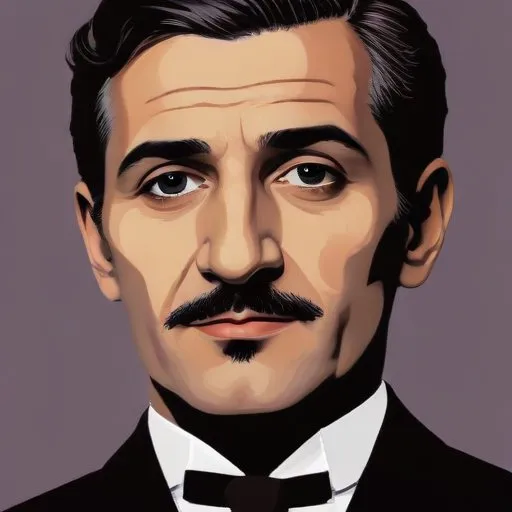
A celebrated Georgian writer and public figure, known for his influential novels and poetry that explored themes of love, freedom, and national identity. His works are considered classics of Georgian literature.
Konstantine Gamsakhurdia, a Georgian writer and public figure, is renowned for his exceptional literary works that infused Western European influences with purely Georgian thematic elements. His remarkable writings, such as The Right Hand of the Grand Master and David the Builder, have left an indelible mark on Georgian literature.
Born on May 3, 1893, in Abasha, a region in western Georgia, Gamsakhurdia hailed from a petty noble family. He received his early education at the Kutaisi gymnasium and later studied in St. Petersburg. During World War I, he spent time in Germany, France, and Switzerland, where he earned his doctorate at Berlin University in 1918.
As a Russian subject, Gamsakhurdia was briefly interned at Traunstein in Bavaria, where he received chocolate from Thomas Mann. This encounter had a profound impact on his literary career, as he began to publish his poems and short stories, influenced by German Expressionism and French Post-Symbolist literature.
Gamsakhurdia's works are distinguished by their exceptional character portrayals, which demonstrate great psychological insight. Another notable feature of his writings is the subtlety he infused into Georgian diction, imitating an archaic language to create a sense of classicism.
His literary style, which blended Western European influences with Georgian thematic elements, has been widely acclaimed. Gamsakhurdia's unique approach has been credited with elevating Georgian literature to a new level, earning him recognition as one of the most prominent writers of his time.
Hostile to the Soviet rule, Gamsakhurdia faced numerous challenges, including exile to a White Sea island and several arrests. Despite these setbacks, he managed to survive the Stalin-era repressions, a feat that few Georgian writers could claim.
Gamsakhurdia's son, Zviad, became a notable Soviet-era dissident who was later elected as the first President of Georgia in 1991. Tragically, Zviad died under suspicious circumstances in the civil war in 1993.
Konstantine Gamsakhurdia's legacy extends far beyond his literary contributions. His unwavering commitment to preserving Georgian identity and culture has inspired generations of writers, intellectuals, and ordinary people.
These iconic works have cemented Gamsakhurdia's position as one of the most revered writers in Georgian literature, leaving a lasting impact on the country's cultural heritage.
Konstantine Gamsakhurdia's literary contributions have not only enriched Georgian literature but have also had a profound impact on modern society. His works have inspired a sense of national pride, promoting cultural awareness and appreciation among the Georgian people.
As a testament to his enduring legacy, Gamsakhurdia's works continue to be widely read and studied, inspiring new generations of writers, scholars, and intellectuals.
"The pen is mightier than the sword, but only if it is wielded by a brave heart."
This quote, often attributed to Gamsakhurdia, reflects his unwavering commitment to the power of literature and its ability to shape society.
Konstantine Gamsakhurdia's life and works are inextricably linked to the tumultuous history of Georgia during the early 20th century. His literary masterpieces serve as a testament to the country's rich cultural heritage, which has endured despite centuries of foreign rule and oppression.
Gamsakhurdia's legacy extends beyond the realm of literature, serving as a beacon of hope and inspiration for those fighting against oppression and striving for national identity.
Born in 1837
A Georgian journalist, lawyer, and politician who played a key role in the country's struggle for independence and is considered the "Father of Georgian Nationalism". He's most known for his literary works and advocacy for social and political reforms.
