


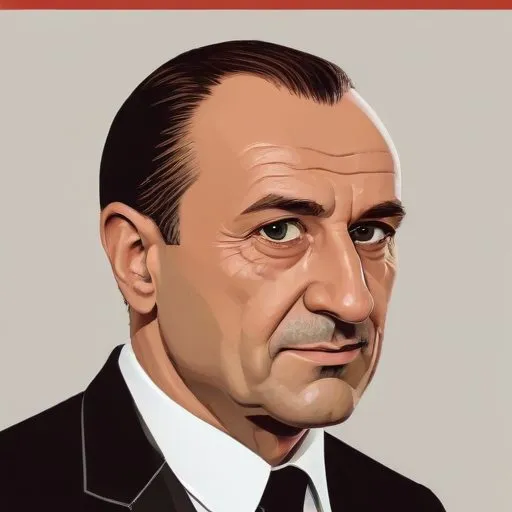
Croatian film pioneer behind influential Yugoslavian New Wave cinema, known for socially conscious, avant-garde works that explored national identity and humanity.
Krsto Papi is renowned for his profound impact on the cinematic landscape of former Yugoslavia, earning him a reputable spot among the best directors of the region. His eclectic body of work, spanning over five decades, showcases his mastery in navigating the complexities of human experience through the lens of his camera.
Born on December 7, 1933, in Vuji Do, near Niki in present-day Montenegro, Papi's early life was immersed in the rich cultural heritage of the Balkans. His fascination with the world of cinema was fueled by the Zagreb filmophile circle, which was heavily influenced by the French New Wave and the works of Alfred Hitchcock.
Papi's early feature films and documentaries are hailed as a cornerstone of Croatian and Yugoslav New Cinema. His work often blurred the lines between art and reality, earning him a reputation as a bold and innovative filmmaker. Two of his most notable early films, Lisice and Predstava Hamleta u Mrduoji Donjoj, are testaments to his unique storytelling approach, which often courted controversy.
As Papi's career progressed, his films adopted a more classical narrative approach, yet remained steadfast in their critique of the political climate. My Uncle's Legacy (1988), a scathing critique of Yugoslavia's political situation under Titoism, earned him a Golden Globe nomination in 1989.
Despite the controversy surrounding his work, Papi's contributions to cinema were recognized with the prestigious Vladimir Nazor Award for lifetime achievement in 2006. He also received the Grand Prix Special des Amriques for his exceptional contribution to the cinematic world.
Krsto Papi's legacy extends far beyond his impressive body of work. He inspired a generation of filmmakers, critics, and theorists, leaving an indelible mark on the Yugoslav Black Wave movement. His unwavering dedication to exploring the human condition through the medium of film has cemented his place as one of the most important directors of the former Yugoslavia.
As a testament to his enduring influence, Papi's films continue to captivate audiences, offering a unique window into the complexities of the human experience. His remarkable life and work serve as a beacon, inspiring future generations of filmmakers and cinema enthusiasts alike.
