


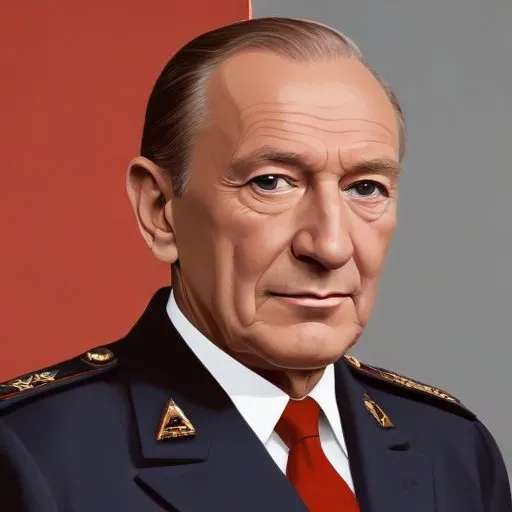
An Austrian colonel and politician who served as the 9th President of Austria, known for his controversial past as a Nazi officer during World War II. He was also the Secretary-General of the United Nations from 1972 to 1981.
Kurt Waldheim, a name synonymous with international diplomacy and controversy, served as the Secretary-General of the United Nations from 1972 to 1981 and later as the President of Austria from 1986 to 1992. His illustrious career was marked by significant accomplishments, but also marred by revelations of his Nazi past, which sparked international outrage.
Born on December 21, 1918, in Sankt Andrä-Wördern, near Vienna, Austria, Waldheim was the eldest child of Walter Watzlawik, a schoolmaster of Czech origin, and his wife Josefine Petrasch. Waldheim's father, who changed his name from Watzlawik to Waldheim in 1918, was a devoutly Catholic man who rose to become the superintendent of schools for the Tulln District.
Waldheim's upbringing was marked by comfort and middle-class values. He excelled in languages and was an accomplished violinist in his school orchestra. Despite his father's desire for him to study medicine, Waldheim had an aversion to the sight of blood and decided to pursue a career in the foreign service.
In 1936, Waldheim volunteered for a 12-month term of enlistment in the Austrian Army and was posted to the 1st Dragoon Regiment. He later became an army reservist and went on to study law at the University of Vienna, graduating in 1944.
Waldheim's early diplomatic career was marked by significant postings, including serving as a First Secretary at the Austrian Embassy in Paris from 1948 to 1951. He later became the Permanent Representative of Austria to the United Nations, a position he held from 1955 to 1956 and again from 1964 to 1968.
In 1972, Waldheim was elected as the Secretary-General of the United Nations, a position he held for two terms until 1981. During his tenure, he played a key role in several significant international events, including the Camp David Accords, the Iran hostage crisis, and the Israeli-Egyptian peace treaty.
Waldheim's leadership during this period was marked by his ability to navigate complex international relations and his commitment to promoting peace and development worldwide.
In 1986, Waldheim ran for the presidency of Austria, sparking international controversy due to revelations about his service in Greece and Yugoslavia during World War II as an intelligence officer in the German Wehrmacht. These allegations led to his exclusion from entering the United States and Israel, among other countries.
Despite the controversy, Waldheim was elected as the President of Austria in 1986 and served until 1992. His presidency was marked by efforts to address the country's Nazi past and promote reconciliation.
Waldheim's legacy is complex and multifaceted. While his diplomatic career was marked by significant accomplishments, his Nazi past has cast a shadow over his life's work. Nevertheless, his commitment to promoting peace and development, particularly during his tenure as Secretary-General of the United Nations, has had a lasting impact on international relations.
In the end, Waldheim's life serves as a reminder of the complexities of human history and the importance of confronting and learning from the past.
"The United Nations is a reflection of its member states, and it is only as strong as its member states are committed to its principles."
"Peace is not a state, it is a process. It requires effort, patience, and perseverance."
Born in 1911
The 22nd Chancellor of Austria, a prominent figure in post-WWII Austrian politics, known for his social democratic policies and efforts to maintain Austria's neutrality during the Cold War.
81 Years Old
The 26th Chancellor of Austria, a lawyer and politician, served as the country's leader from 2000 to 2007, known for his conservative policies and European integration efforts. He played a key role in shaping Austria's economy and foreign policy during his tenure.
88 Years Old
The 11th President of Austria, a renowned academic and politician, served as the country's head of state from 2004 to 2016, known for promoting unity and stability. He's also a respected historian and law expert.
82 Years Old
The current President of Austria, a former economics professor and Green Party leader, known for his strong stance on environmental issues and European integration.
40 Years Old
German midfielder who played for clubs like Borussia Dortmund and Hannover 96, earning 13 caps for the national team between 1984 and 1985.
71 Years Old
Luxembourg's Prime Minister from 1995 to 2013, known for his key role in shaping the European Union's economic and monetary policies. He was the President of the European Commission from 2014 to 2019, overseeing the EU's executive body.
96 Years Old
The first unified Germany's leader, who oversaw the country's reunification after the Berlin Wall's fall, and is credited with creating a strong, stable economy.
