


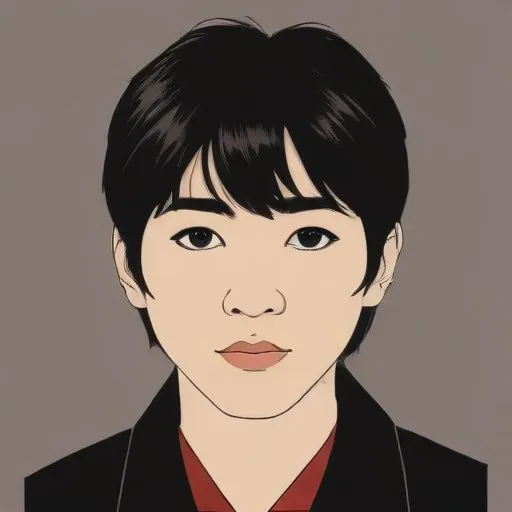
A Japanese pop sensation who topped the charts with his 1963 hit "Sukiyaki," a catchy tune that became the first Japanese song to reach number one on the Billboard Hot 100 chart. He's also remembered for his tragic death in a plane crash at just 26 years old.
Kyu Sakamoto, also known as Sakamoto Kyu, is best remembered as the Japanese singer who propelled himself to international stardom with his 1963 hit song "Sukiyaki," a catchy tune that topped the Billboard Hot 100 chart, making him the first Asian recording artist to achieve this feat.
Despite his untimely death in 1985, Sakamoto's legacy continues to inspire new generations of music enthusiasts, with "Sukiyaki" remaining an enduring symbol of Japanese popular culture.
Born on December 10, 1941, in Kawasaki, Kanagawa Prefecture, Japan, Sakamoto grew up in a large family with nine siblings. His early life was marked by turmoil, with his family relocating to rural Kasama, Ibaraki Prefecture, during World War II. After the war, they returned to Kawasaki, where his father opened a restaurant.
In 1956, Sakamoto's parents divorced, and he adopted his mother's maiden name, shima. He developed an interest in music during his high school years, teaching himself to play the guitar and forming a band with his friends.
Sakamoto's breakthrough came in 1961 when he won a talent show at the Nippon Television Network, leading to a recording contract with Toshiba Records. His debut single, "Ue o Muite Arukō" (also known as "Sukiyaki"), was released in 1963 and became a massive hit in Japan, selling over 1 million copies.
The song's international appeal soon became apparent, with it topping the Billboard Hot 100 chart in June 1963, a first for an Asian artist. The song's catchy melody and enigmatic lyrics, which actually referred to the struggles of the Japanese people during the post-war era, captivated audiences worldwide.
Sakamoto's achievements were recognized with numerous awards, including the Grand Prix at the 1963 Japanese Music Awards and the Best New Artist award at the 1964 Edison Awards.
Sakamoto's life was cut short on August 12, 1985, when he died in the crash of Japan Air Lines Flight 123, which claimed the lives of 520 people. This tragedy remains the deadliest single-aircraft accident in aviation history.
Despite his untimely passing, Sakamoto's legacy continues to inspire and influence modern Japanese music. His iconic song "Sukiyaki" remains a beloved cultural artifact, with its catchy melody and poignant lyrics continuing to captivate audiences worldwide.
At the height of his fame, Sakamoto's net worth was estimated to be around ¥100 million (approximately $800,000 USD), a substantial amount for a Japanese artist at the time. His international success also contributed significantly to Japan's music industry, paving the way for future generations of Japanese artists.
Sakamoto's music and cultural impact extend beyond the realm of entertainment. His success helped bridge the cultural divide between East and West, introducing Japanese culture to a global audience. His music also played a significant role in shaping Japan's post-war identity, providing a platform for artists to express themselves and showcase their talents.
Sakamoto's legacy continues to inspire new generations of artists, with many citing him as a major influence. His music remains a testament to the power of cultural exchange and the enduring appeal of Japanese popular culture.
Kyu Sakamoto's remarkable journey from a talented young musician to an international sensation serves as a testament to the power of music to transcend cultural boundaries and touch hearts worldwide.
94 Years Old
A renowned French pianist, composer, and conductor, he crafted iconic film scores and jazz-infused music, earning numerous awards and accolades. His work continues to enchant audiences worldwide.
Born in 1924
A legendary French-Armenian singer-songwriter and actor, known for his soulful, poetic ballads and iconic films, leaving an indelible mark on the world of music and cinema.
93 Years Old
A pioneering multimedia artist and musician who blurred the lines between art, music, and activism, creating thought-provoking and often controversial works that challenged societal norms.
