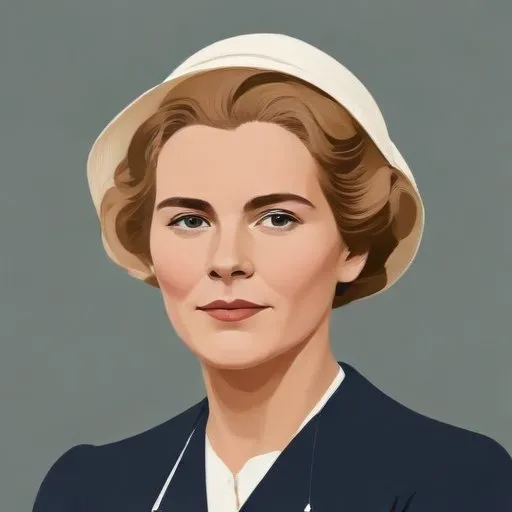
Lady Eve Balfour: The Organic Pioneer
Breaking Ground in Sustainable Farming
Lady Eve Balfour, a British farmer, educator, and organic farming pioneer, revolutionized the way we approach agriculture. She is renowned for launching the Haughley Experiment, the first long-term, side-by-side scientific comparison of organic and chemical-based farming, which set the stage for modern sustainable farming practices.
Early Life and Inspiration
Born on July 16, 1898, Lady Eve was one of six children to Gerald, 2nd Earl of Balfour, and Lady Elizabeth Edith Betty Bulwer-Lytton. Her roots in agriculture date back to her childhood, when she decided at 12 years old that she wanted to be a farmer. This passion was further fueled by her studies at the University of Reading, where she became one of the first women to pursue a diploma in agriculture.
Pioneering Education and Practical Experience
After obtaining her diploma in 1917, Lady Eve gained practical experience in farming through a year-long apprenticeship at Manor Farm in Reading. Her dedication and hard work soon led to her appointment as bailiff to a farm near Newport, Wales, under the direction of the Monmouthshire Women's War Agricultural Committee.
The Haughley Experiment and "The Living Soil"
In 1919, Lady Eve and her sister Mary purchased New Bells Farm in Haughley Green, Suffolk, using inheritance monies. This marked the beginning of her pioneering work in organic farming. In 1939, she launched the Haughley Experiment, a groundbreaking study that compared organic and chemical-based farming methods side by side. The results of this experiment were compiled into her influential book "The Living Soil," published in 1943 by Faber and Faber.
Philosophical Contributions and Beliefs
Lady Eve's work was guided by her belief in the interconnectedness of soil, plants, and animals. She championed the importance of treating the soil as a living organism, rather than simply a medium for plant growth. Her approach to sustainable farming emphasized the need for a holistic understanding of the natural world.
Personal Milestones and Key Life Events
- 1917: Graduated with a diploma in agriculture from the University of Reading
- 1919: Purchased New Bells Farm in Haughley Green, Suffolk, with her sister Mary
- 1939: Launched the Haughley Experiment
- 1943: Published "The Living Soil" with Faber and Faber
Influence on Modern Society
Lady Eve's pioneering work in organic farming has had a lasting impact on modern sustainable agriculture practices. Her dedication to education and research has inspired generations of farmers, educators, and environmentalists. Her legacy continues to shape our understanding of the importance of soil health and sustainable farming practices.
Career Highlights and Major Works
- The Haughley Experiment (1939)
- "The Living Soil" (1943)
- Chairperson of Haughley Parish Council for many years
- Organized Air Raid Precautions in Haughley during World War II
Legacy
Lady Eve Balfour's groundbreaking work has left an indelible mark on the world of sustainable agriculture. Today, her legacy continues to inspire a new generation of farmers, educators, and environmentalists to prioritize soil health and the long-term sustainability of our planet.
FAQ
What was Lady Eve Balfours contribution to the organic movement?
Lady Eve Balfour was a pioneering figure in the organic movement, advocating for sustainable agriculture practices and the importance of soil health. She co-founded the Soil Association, a leading organization in the organic movement.
What inspired Lady Eve Balfour to become involved in the organic movement?
Lady Eve Balfour was inspired to become involved in the organic movement after witnessing the decline of soil health and the environmental degradation caused by intensive farming practices. She believed that organic farming was a more sustainable and environmentally friendly approach.
What were Lady Eve Balfours views on the importance of soil health?
Lady Eve Balfour believed that soil health was critical to sustaining life on earth. She advocated for practices that promoted soil fertility, structure, and biodiversity, recognizing the interconnectedness of soil, plant, and human health.
How did Lady Eve Balfours work influence the development of organic farming?
Lady Eve Balfours work had a significant impact on the development of organic farming, inspiring a new generation of farmers, researchers, and policymakers to adopt sustainable agriculture practices. Her advocacy helped to raise awareness about the importance of soil health and the need for environmentally friendly farming methods.
What is Lady Eve Balfours legacy in the organic movement today?
Lady Eve Balfours legacy in the organic movement is one of pioneering leadership and advocacy. She is recognized as a trailblazer in the field of organic agriculture, and her work continues to inspire new generations of organic farmers, researchers, and advocates.