


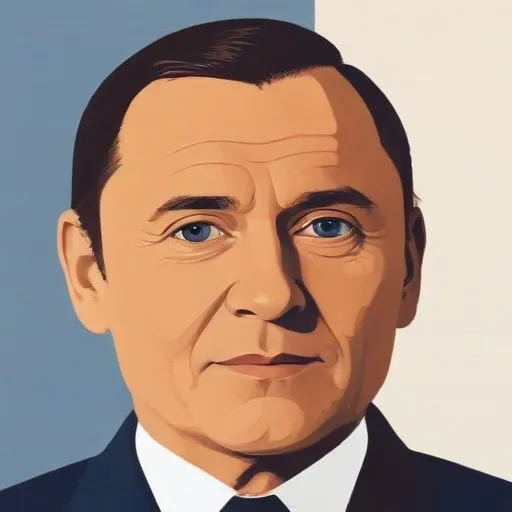
Estonian architect and politician who served as Minister of the Interior, known for his contributions to Estonia's post-Soviet reconstruction and urban planning developments.
Lagle Parek is a renowned Estonian politician and former Minister of the Interior, known for her courage and resilience in the face of Soviet oppression. As a key figure in Estonia's struggle for independence, Parek has left an indelible mark on the country's history.
Born on April 17, 1941, in Prnu, Estonia, Parek's life was marked by tragedy from an early age. Her father, Karl Parek, a captain in the Estonian military, was deported to Leningrad and executed by Soviet authorities in 1941. In 1949, Parek, along with her mother, older sister, and grandmother, was deported to Siberia as part of the Operation Priboi deportation of Baltic inhabitants.
Her mother, Elsbeth Parek, was imprisoned in Siberia for possessing "forbidden books" in her museum, and was only released in 1953 following an amnesty. Parek lived with her grandmother in Siberia, eventually returning to Estonia after Stalin's death.
Parek graduated from the Tallinn University of Technology and worked as an architect in the State Planning Commission. She later worked as a technician and technologist in a design institute in Tartu.
In 1981, Parek participated in the signing of an open letter to the heads of government of the USSR and northern European countries, supporting the Scandinavian Nuclear-weapon-free zone initiative and proposing the removal of Soviet missiles from Baltic states. She also contributed to the publication of Samizdat journals and liaised with dissidents in Russia.
On March 5, 1983, Parek was arrested and later sentenced to 6 years in prison and 3 years of exile for her dissident activities.
Lagle Parek's bravery and unwavering commitment to Estonia's independence have inspired generations of Estonians. As Minister of the Interior in the first post-Soviet government, Parek played a crucial role in shaping Estonia's transition to democracy.
Her legacy extends beyond politics, serving as a testament to the power of human resilience and the importance of standing against oppression.
Today, Lagle Parek remains an iconic figure in Estonian history, a symbol of courage and determination in the face of adversity.
53 Years Old
Estonian architect known for designing functionalist buildings and contributing to the development of modern Estonian architecture, particularly in the 1930s.
Born in 1885
Noted for designing iconic buildings in Estonia, including the Tallinn Song Festival Grounds, which have become symbols of national identity.
Born in 1922
Noted Estonian architect who designed many iconic buildings in Tallinn, including the city's Town Hall, and played a significant role in shaping the country's architectural heritage.
89 Years Old
Estonian architect renowned for designing iconic buildings, including the Estonian National Opera and Ballet Theatre, blending modernism with national romanticism.
66 Years Old
Noted for designing iconic buildings in Estonia, including the National Library and the Estonian Embassy in Moscow, showcasing a blend of modernism and national romanticism.
