


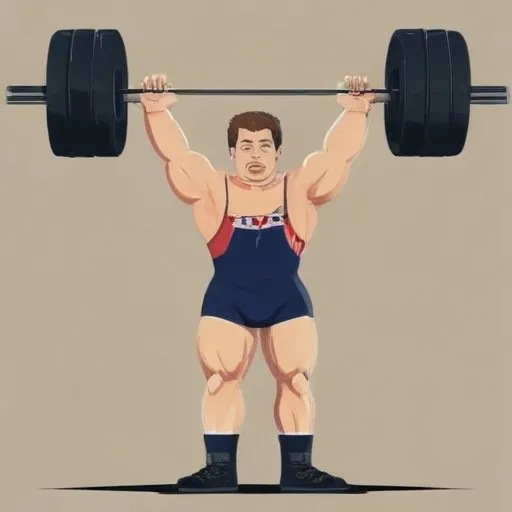
A Scottish athlete who won the first-ever Olympic weightlifting gold medal in 1896 and was a strongman performer in circus and music halls. He was a pioneering figure in the development of modern weightlifting.
Launceston Elliot is revered as the first athlete representing the United Kingdom to clinch an Olympic championship title, specifically in weightlifting, at the inaugural modern Olympic Games in Athens, 1896. This remarkable feat catapulted him to fame, earning him a special place in the annals of British sporting history.
Born on June 9, 1874, in Kaladagi, India (now in Karnataka State), Launceston Elliot was named after the city of Launceston, Tasmania, Australia, where his parents had initially settled before relocating to India. His family boasted strong connections with India, with his father, Gilbert Wray Elliot, serving as a magistrate in the Indian Civil Service. Launceston's grandfather, Sir Charles Elliot, was the former governor of Saint Helena, solidifying the family's Scottish aristocratic roots.
In 1887, Launceston's family moved to England, where he was exposed to the world of weightlifting under the guidance of the renowned Eugen Sandow. This encounter proved pivotal, as Launceston's exceptional physique and natural talent for weightlifting began to flourish. Sandow's influence played a significant role in shaping Launceston's athletic career, which would soon take him to unprecedented heights.
In January 1891, at the tender age of 16, Launceston made his debut at the first British Championships held at the prestigious Caf Monico in London. His impressive performance set the stage for future successes. Three years later, he emerged victorious at the Royal Aquarium in Westminster, solidifying his position as a force to be reckoned with in the weightlifting world.
In 1896, Launceston traveled to Athens to participate in the inaugural modern Olympic Games. Despite the lack of international rules and classifications for weightlifting at the time, Launceston's determination and skill earned him a silver medal in the two-handed lift event. Although he tied with Viggo Jensen of Denmark, Prince George awarded Jensen the gold medal due to his superior lifting style.
Launceston Elliot's remarkable achievements paved the way for future generations of weightlifters, inspiring a new era of athletic excellence. His pioneering spirit and dedication to the sport have left an indelible mark on the history of British weightlifting.
Launceston Elliot's personal life remains somewhat shrouded in mystery, with limited records of his later years. However, his legacy as a trailblazing Olympic champion continues to inspire and motivate aspiring athletes to this day.
Born in 1879
A Polish wrestler and strongman who won the World Heavyweight Championship in 1926 and was known for his incredible strength, holding the title for over four years. He was a pioneer in professional wrestling, helping to popularize the sport in the early 20th century.
Born in 1877
A renowned wrestler and strongman of the early 20th century, known for his impressive physique and undefeated championship reign in the early 1900s.
