


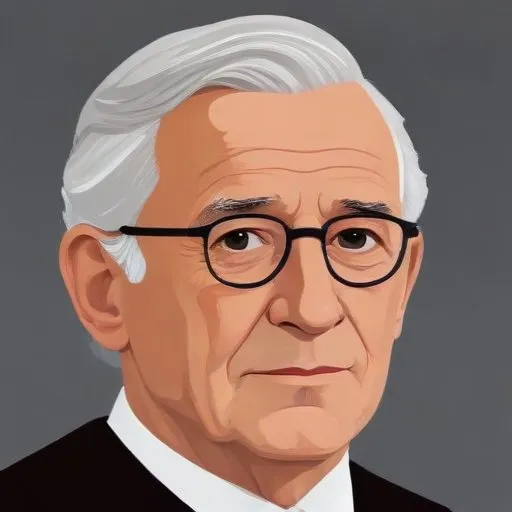
A former Chief Justice of the Supreme Court of New South Wales, he played a significant role in shaping the Australian judicial system and upholding the rule of law. He's remembered for his fair and progressive judgments .
Sir Laurence Whistler Street, the 14th Chief Justice of the Supreme Court of New South Wales and Lieutenant Governor of New South Wales, left an indelible mark on the Australian judiciary and naval circles. This distinguished individual's remarkable career spanned decades, earning him recognition as a trailblazer in alternative dispute resolution and a champion of Indigenous Australian rights.
Born in Sydney, New South Wales, on 3 July 1926, Street was the scion of a prominent family with a rich legacy of public service. His father, Kenneth Whistler Street, and grandfather, Sir Philip Whistler Street, had both served as Chief Justices of the Supreme Court of New South Wales and Lieutenant Governors of New South Wales before him. His mother, Jessie Street (née Lillingston), was a suffragette and a champion of women's rights.
At just 17, Street enlisted in the Royal Australian Navy and served during World War II. Following his wartime service, he graduated from Sydney Law School, laying the foundation for a distinguished legal career.
Street was admitted to the New South Wales Bar in 1951, quickly establishing himself as a leading authority on equity, commercial law, and maritime law. His expertise earned him a reputation as a skilled mediator, and he would go on to pioneer alternative dispute resolution in Australia.
In 1981, Street was appointed Chief Justice of the Supreme Court of New South Wales, a position he held until 1990. During his tenure, he oversaw significant reforms to the state's judicial system and played a crucial role in the return of the remains of 17 Indigenous Australians from the National History Museum in London, marking a landmark moment in Australia's reconciliation journey.
Street's naval connections remained strong throughout his life. He commanded the Royal Australian Navy Reserve and served as an honorary colonel in the Australian Army Reserve. He also chaired the integration of protocols between the Australian Federal Police and the Australian Security Intelligence Organisation, and played a key role in naval warship acquisitions.
Following his retirement from the bench, Street continued to serve the community, chairing Fairfax Media and sitting on the board of Banca Monte dei Paschi di Siena, the world's oldest bank. He received numerous honors for his public service, including a knighthood in 1974.
Sir Laurence Whistler Street's remarkable life was marked by dedication to public service, a fierce commitment to justice, and a steadfast loyalty to his country. His enduring legacy continues to inspire future generations of legal professionals and naval officers.
Born in 1888
American sports shooter who won three Olympic medals and set multiple world records in trap shooting, earning him a place in the USA Shooting Hall of Fame.
88 Years Old
The 11th Chief Justice of Australia, a highly respected figure in the country's judicial system, known for his significant contributions to the development of Australian law and his leadership of the High Court.
95 Years Old
The 22nd Governor-General of Australia, serving from 1996 to 2001, known for his progressive views and advocacy for Indigenous Australian rights and reconciliation. He was a strong critic of Australia's treatment of its Indigenous people.
