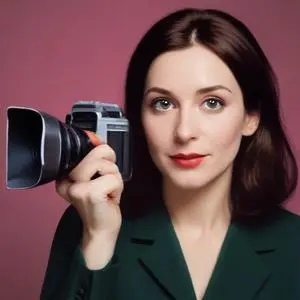
Laurie Simmons: The Pioneer of Staged Photography
The Conceptual Artist Behind the Camera
Laurie Simmons is a renowned American artist, photographer, and filmmaker known for her thought-provoking and visually striking images that challenge our perceptions of reality. Since the mid-1970s, she has been staging scenes with dolls, ventriloquist dummies, objects on legs, and people to create photographs that reference domestic scenes, sparking a new wave of conceptual art.
Early Life and Education
Born on October 3, 1949, in Far Rockaway, Queens, New York, Simmons grew up in a Jewish community as the daughter of a housewife and a dentist. She received her BFA from Tyler School of Art in 1971, laying the foundation for her future artistic endeavors.
A Career of Innovation
Photography: The Beginning
Simmons' early black-and-white images, taken in 1976, featured dollhouses, unpeopled variations on each room, showcasing her unique ability to create a dreamlike atmosphere using sunlight and different angles. She then introduced a housewife doll into a kitchen set, photographing the figure in various positions, resulting in a dramatically different mood.
The Black Series: A Turning Point
In the Black Series, Simmons constructed spare rooms with dollhouse furniture and replicas of iconic artworks, capturing the essence of interior spaces. This body of work marked a significant milestone in her career, as she considered these photographs her strongest at the time.
Early Color Interiors: A Leap Forward
In 1978, Simmons began shooting her dollhouse scenes in color, defying the convention that black-and-white photography was more truthful. This bold move led to the creation of her Early Color Interiors series, which blended artifice with reality.
The Pictures Generation: A Movement Born
Simmons, along with
Cindy Sherman, Barbara Kruger, and Louise Lawler, formed The Pictures Generation, a group of artists who rose to prominence in the 1970s. This collective challenged traditional notions of photography, using the medium to explore themes of identity, representation, and reality.
Awards and Honors
Simmons has received numerous awards and honors for her contributions to the art world, including the National Endowment for the Arts Fellowship and the Guggenheim Fellowship.
Philosophical Contributions and Beliefs
Throughout her career, Simmons has encouraged viewers to question their perceptions of reality, highlighting the constructed nature of photography. Her work serves as a reminder that art can be both playful and thought-provoking, blurring the lines between reality and fiction.
Legacy and Impact
Laurie Simmons' innovative approach to photography has inspired generations of artists, solidifying her position as a pioneer in the world of conceptual art. Her influence extends beyond the art world, as her work continues to spark conversations about the nature of reality and our place within it.
Personal Milestones and Key Life Events
- 1971: Received BFA from Tyler School of Art
- 1976: Created early black-and-white images featuring dollhouses
- 1978: Began shooting color photographs, defying convention
- 1990s: Explored the medium of film, creating short films and videos
Controversies and Public Perception
Simmons' work has often been met with controversy, as her use of dolls and staged scenes has sparked debates about the role of photography in representing reality. Despite this, her art remains a testament to her commitment to pushing boundaries and challenging our understanding of the world around us.
Quotes and Memorable Sayings
- "I'm interested in the way that photography can be used to represent the world, but also to distort it."
- "I think that's what art is about: making you see something in a way you've never seen it before."
Visual Timeline and Milestones
- 1970s: Emerged as a prominent figure in The Pictures Generation
- 1980s: Explored the use of color in her photographs
- 1990s: Ventured into filmmaking, creating short films and videos
- 2000s: Continued to produce innovative and thought-provoking work
Laurie Simmons' legacy serves as a reminder that art has the power to challenge, inspire, and transform. As a pioneer of staged photography, she has left an indelible mark on the art world, encouraging future generations to push the boundaries of creativity and imagination.
FAQ
What is Laurie Simmons most notable photographic series, and what inspired it?
Laurie Simmons most notable photographic series is Walking Objects, which features dolls and ventriloquists dummies dressed in 1950s-style clothing and placed in everyday settings. The series explores themes of femininity, domesticity, and the American Dream.
How does Laurie Simmons use photography to explore themes of identity and gender?
Laurie Simmons uses photography to subvert traditional notions of identity and gender, often employing dolls, mannequins, and other objects to comment on societal expectations and cultural norms.
What is Laurie Simmons approach to storytelling in her photographs?
Laurie Simmons approach to storytelling in her photographs is characterized by a sense of mystery and ambiguity, often leaving viewers to fill in the gaps and create their own narratives.
How does Laurie Simmons work reflect her experience as a woman in a male-dominated art world?
Laurie Simmons work reflects her experience as a woman in a male-dominated art world by challenging patriarchal norms and power structures, often using humor and irony to critique the status quo.
What is Laurie Simmons legacy in the world of photography?
Laurie Simmons legacy in the world of photography is marked by her innovative approach to storytelling, her commitment to exploring themes of identity and gender, and her influence on a new generation of photographers.