


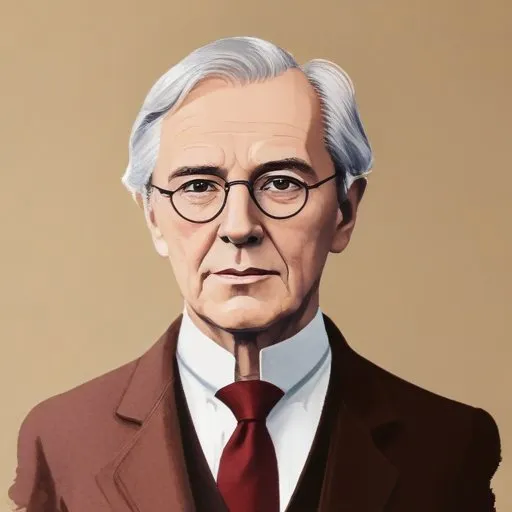
A Canadian historian, journalist, and politician who served as a senator and was known for his work in promoting Canadian history and culture through television documentaries. He was also a prominent figure in the country's bilingualism and multiculturalism efforts.
Laurier LaPierre was a Canadian icon, renowned for his trailblazing career as a professor, broadcaster, journalist, and author. He is perhaps best known for co-hosting the CBC's influential public affairs show, "This Hour Has Seven Days," alongside Patrick Watson in the 1960s, which became a beacon for intellectual discussion and social commentary.
Born on November 21, 1929, in Lac-Mégantic, Quebec, LaPierre's family later moved to Sherbrooke, Quebec, where he completed high school. He then entered the Paulist Fathers in Baltimore, Maryland, as a novitiate, before pursuing higher education at St. Michael's College at the University of Toronto. LaPierre earned his Bachelor of Arts in 1955, Master of Arts in 1957, and Ph.D. in History in 1962, all from the University of Toronto.
During his university years, LaPierre was a part-time teacher at Upper Canada College in Toronto. He later taught history at the College of Christ the King (now King's College, University of Western Ontario) from 1959-1961, Loyola College (now part of Concordia University) from 1961-1963, and McGill University from 1963-1978. His passion for education extended to Vancouver, where he briefly taught at Simon Fraser University after moving in 1978.
In the 1960s, LaPierre's intellectual curiosity and charismatic presence led him to co-host "This Hour Has Seven Days," a groundbreaking CBC program that tackled complex social issues and sparked national conversations. The show's cancellation in 1966 sparked widespread outrage, cementing LaPierre's status as a champion of free speech and critical thinking.
Following the cancellation of "This Hour Has Seven Days," LaPierre entered politics as a star candidate for the New Democratic Party in the 1968 federal election. Although he came second in the riding of Lachine, his involvement in politics marked a significant shift in his career, showcasing his commitment to public service and social change.
In June 2001, LaPierre was appointed to the Senate, where he became an outspoken advocate for French-English relations, multiculturalism, and social justice. As a member of the Liberal caucus, he supported Jean Chrétien's leadership, often taking a contrarian stance to Paul Martin's supporters.
LaPierre married Paula Jo Armstrong in 1960, and they had two sons, Dominic (born 1962) and Thomas (born 1965), before divorcing in 1982. He leaves behind five grandchildren: Paige, Alex, Georgia, Toby, and others. Throughout his life, LaPierre was driven by a sense of purpose, using his platform to educate, inspire, and challenge Canadians.
Laurier LaPierre's contributions to Canadian society are multifaceted and far-reaching. As a broadcaster, he brought intellectual discourse to the masses, shaping public opinion and sparking critical thinking. As a senator, he championed social justice and multiculturalism, leaving an indelible mark on Canadian politics. His legacy serves as a testament to the power of education, critical thinking, and public service.
Born in 1919
The charismatic leader who championed Canadian unity and implemented progressive policies, known for his iconic style and influential legacy in shaping modern Canada.
92 Years Old
The 20th Prime Minister of Canada, serving from 1993 to 2003, known for his leadership during the Quebec sovereignty movement and his role in shaping Canada's national unity. He implemented policies like the Clarity Act and the National Child Benefit.
87 Years Old
The 18th Prime Minister of Canada, a skilled lawyer and politician, led the country from 1984 to 1993, known for negotiating the Canada-US Free Trade Agreement and introducing the Goods and Services Tax.
79 Years Old
The first and only female Prime Minister of Canada, serving for a brief four months in 1993, known for her efforts to reform the country's justice system. She was also a strong advocate for women's rights and gender equality.
87 Years Old
The 16th Prime Minister of Canada, serving from 1979 to 1980, is known for being a Progressive Conservative and leading a brief but significant term in Canadian politics. He's also a journalist and politician who played a key role in shaping Canada's foreign policy.
97 Years Old
The 17th Prime Minister of Canada, serving from 1984 to 1985, is most known for his brief tenure and struggles to maintain party unity. He's also recognized for his prior role as Minister of Justice, where he introduced significant reforms.
Born in 1922
A charismatic leader who championed Quebec's independence and shaped the province's distinct identity through his passionate politics and journalism. He's revered for his role in Quebec's Quiet Revolution.
