


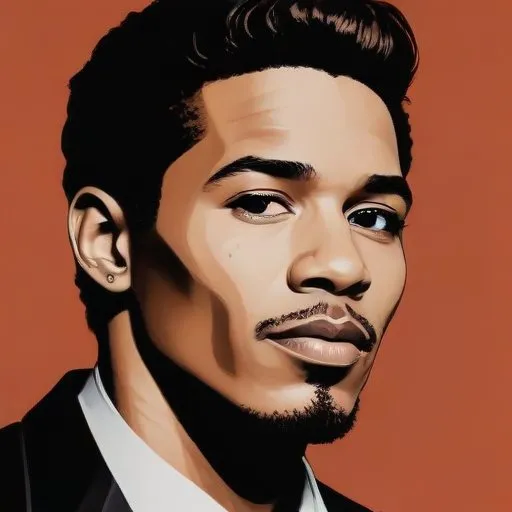
A legendary Motown songwriter and producer, credited with crafting iconic hits for The Four Tops, The Supremes, and other legendary groups. His work helped shape the sound of Motown and 1960s soul music.
Lawrence Payton, the renowned American tenor, songwriter, vocal arranger, musician, and record producer, is best known for his pivotal role in shaping the iconic Motown quartet, the Four Tops. With his gift for harmonies and smooth vocal arrangements, Payton's contributions to the group's sound are undeniable, earning him a permanent place in the annals of music history.
Payton's musical journey began in the 1950s, when he, along with Obie Benson, Levi Stubbs, and Duke Fakir, formed the Four Aims. The group later changed its name to the Four Tops to avoid confusion with the Ames Brothers. With the help of Payton's songwriter cousin, Billy Davis, the group signed to Chess Records in 1956. Although they achieved local success, it wasn't until they joined the Motown label in 1963 that they truly found their footing, charting over two dozen hits throughout the 1960s and early 1980s.
Payton's vocal arrangements and harmonies were instrumental in crafting the Four Tops' signature sound. While often overshadowed by Levi Stubbs' powerful lead vocals, Payton sang lead on several songs, including "We All Gotta Stick Together," "Feel Free," "Love Feels Like Fire," and "Until You Love Someone." Stubbs praised Payton's contributions, saying, "He could pick notes out of the air. He had that gift. He was responsible for our harmonies."
Lawrence Payton was born on March 2, 1938, and passed away on June 20, 1997, at the age of 59, due to liver cancer. He was interred in Detroit's Woodlawn Cemetery. Payton had 11 children, including Lawrence Jr., also known as Roquel, who went on to sing with the Four Tops, continuing his father's legacy.
As a member of the Four Tops, Payton was inducted into the Rock and Roll Hall of Fame in 1990, and the group received a star on the Hollywood Walk of Fame.
The Four Tops' music, heavily influenced by Payton's harmonies and arrangements, had a profound impact on the development of Motown and soul music. Their hits, such as "Reach Out I'll Be There," "Bernadette," and "Standing in the Shadows of Love," continue to be celebrated and enjoyed by generations of music lovers.
Payton's legacy extends beyond his work with the Four Tops. He was a true innovator, pushing the boundaries of vocal harmonies and arrangements, and his influence can be seen in countless subsequent musical acts.
Lawrence Payton's remarkable talent, dedication, and contributions to the world of music have left an indelible mark on the industry. His legacy continues to inspire and entertain, cementing his place as one of the most important figures in Motown history.
86 Years Old
Legendary Motown icon behind timeless hits like "My Girl" and "Tracks of My Tears", crafting soulful melodies and poetic lyrics that captivated generations.
90 Years Old
The iconic lead vocalist of a legendary Motown group, known for his powerful, soaring voice and timeless hits like "Reach Out I'll Be There" and "I Heard It Through the Grapevine".
90 Years Old
Member of the legendary Motown group The Four Tops, known for smooth harmonies and iconic hits like "Reach Out I'll Be There" and "Standing in the Shadows of Love".
84 Years Old
Lead singer of The Temptations, known for iconic Motown hits like "My Girl" and "Papa Was a Rolling Stone".
84 Years Old
A legendary bass singer and founding member of the Temptations, known for his smooth, deep vocals and iconic performances of Motown classics like "My Girl" and "Papa Was a Rolling Stone".
54 Years Old
A poet and musician who blends spoken word with hip-hop and rock to create a unique sound, known for his thought-provoking lyrics and energetic live performances.
86 Years Old
Lead vocalist of The Temptations, known for his soaring falsetto and iconic hits like "Cloud Nine" and "Papa Was a Rollin' Stone".
85 Years Old
Lead vocalist of the Temptations, known for his smooth, soulful voice and iconic hits like "My Girl" and "Ain't Too Proud to Beg".
