


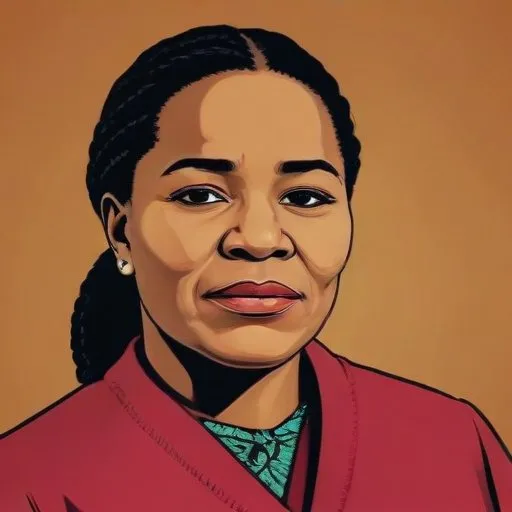
A Basotho lawyer and politician who served as the 2nd Prime Minister of Lesotho, known for his role in the country's transition to independence from British colonial rule. He played a key part in shaping Lesotho's early years as a sovereign nation.
Leabua Jonathan, the first prime minister of Lesotho, is renowned for his tireless efforts in securing independence for his country from British colonial rule and leading the nation towards economic growth and development. His remarkable leadership spanning over two decades (1965-1986) has left an indelible mark on the history of Lesotho.
Born on October 30, 1914, in Leribe, Lesotho, Jonathan was a minor chief and a great-grandson of King Moshoeshoe I, the founder of the Basotho nation. Before venturing into politics, he worked as a mine induna at Brakpan, South Africa. However, his royal lineage and sense of responsibility towards his people led him to return to Rakolos and engage in local government affairs in Basutoland from 1937.
Jonathan's foray into politics began in 1959 when he founded the Basutoland National Party (BNP), later renamed the Basotho National Party, with the support of Canadian Catholic missionaries. Despite a humble start, the party won 31 parliamentary seats in the pre-independence elections of April 1965, paving the way for Jonathan to become the Prime Minister of Lesotho. He took office on July 7, 1965, and played a crucial role in securing independence for his country on October 4, 1966.
Jonathan converted to Catholicism and remained committed to his faith throughout his life. His dedication to his people and his country earned him respect and admiration from both national and international leaders. He passed away on April 5, 1987, leaving behind a rich legacy that continues to inspire future generations of Lesotho citizens.
"I am confident that our country will continue to grow and prosper, and that the Basotho people will always remain united in their quest for a brighter future."
Leabua Jonathan's premiership coincided with a tumultuous period in Southern African history, marked by the rise of apartheid in South Africa and the struggle for independence in various countries. His leadership and vision played a vital role in shaping the course of Lesotho's history, earning him a place among the most prominent figures of African nationalism.
Jonathan's leadership style and policies are often compared to those of other prominent African leaders of the time, such as Kenneth Kaunda of Zambia and Hastings Banda of Malawi. While they shared similar goals and challenges, Jonathan's unique approach to governing a country surrounded by South Africa set him apart from his contemporaries.
Leabua Jonathan's contribution to Lesotho's independence and development has had a lasting impact on the country and its people. His leadership also inspired a generation of African leaders, reinforcing the importance of cooperation and diplomacy in achieving regional stability and prosperity.
Today, Jonathan's legacy continues to serve as a source of inspiration for Lesotho citizens, a testament to the power of visionary leadership and dedication to one's country.
© 2023 Family Travel Blog
